en
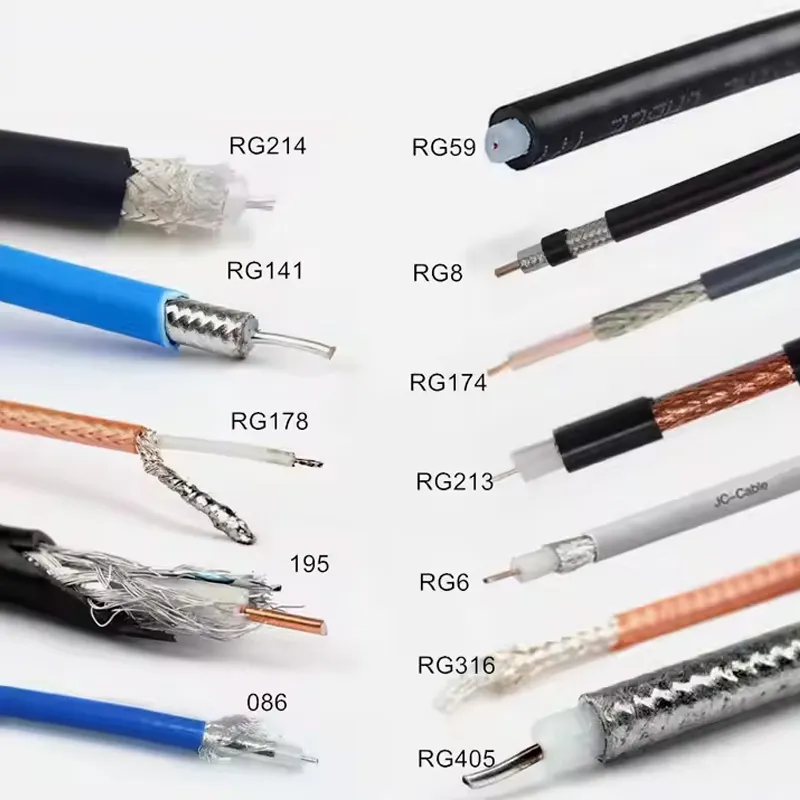



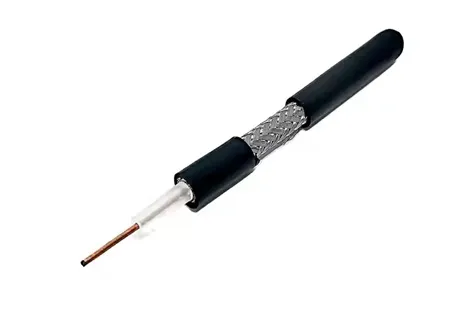
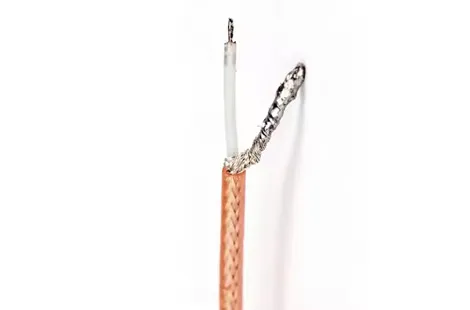
RG59 is an affordable and easy to install 75 ohm coaxial cable that was once the mainstay of analog video surveillance and cable television. Its core disadvantage is that the central conductor is relatively thin, resulting in significant signal attenuation, which limits its performance in long-distance or high bandwidth applications. In modern applications, especially for high-definition signals and long-distance transmission, RG6 is often seen as a superior upgrade alternative. When choosing, it is important to determine whether RG59 is suitable or whether RG6 needs to be selected based on the specific application scenario (signal type, transmission distance, environmental interference, budget).
| Structure parameters | ||
| Item | Material | Diamenter (mm) |
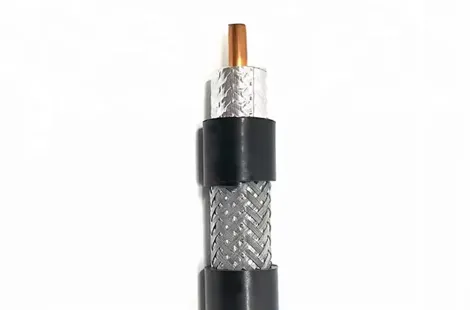
| Inner Conductor | Bare copper wire | 0.81 |
| Dielectric | PE | 3.66 |
| Outer Conductor | Aluminum magnesium wire weaving | 4.1 |
| Jacket | PVC/PE | 6.1 |
| Performance parameters | ||
| Capacitor | 52pF/m | |
| Impedance | 75ohm | |
| Transmission rate | 88% | |
| Maximum operating voltage | 3KVrms | |
| Maximum operating frequency | 3000MHz | |
| Working temperature range | -40~+80℃ | |
| ROHS/CE/FCC | YES | |
| Frequency | 5MHz | 2.7dB/m |
| 50MHz | 6.3dB/m | |
| 100MHz | 9.32dB/m | |
Coaxial characteristic impedance of R G59 cable: 75 ohms. This is the standard impedance for RF transmission, ensuring effective transmission of signals between cables and connected devices such as cameras, recorders, televisions, modulators, and reducing reflection losses.
Central conductor size: typically 20 AWG or 22 AWG.
Signal attenuation (loss): The main drawback of RG59 is that the signal attenuation is relatively large, especially at higher frequencies and longer distances.
Bandwidth: Theoretically, it can transmit signals up to about 1 GHz or higher, but in practical applications, due to attenuation issues, its effective transmission distance for high-quality video signals (such as high-definition analog or digital) is limited.
 English