en
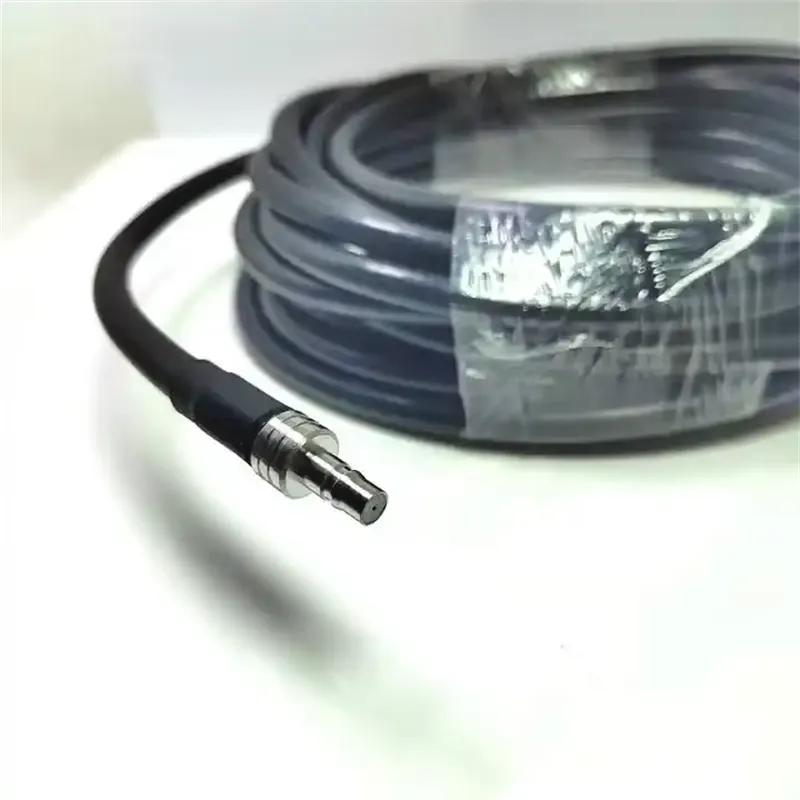
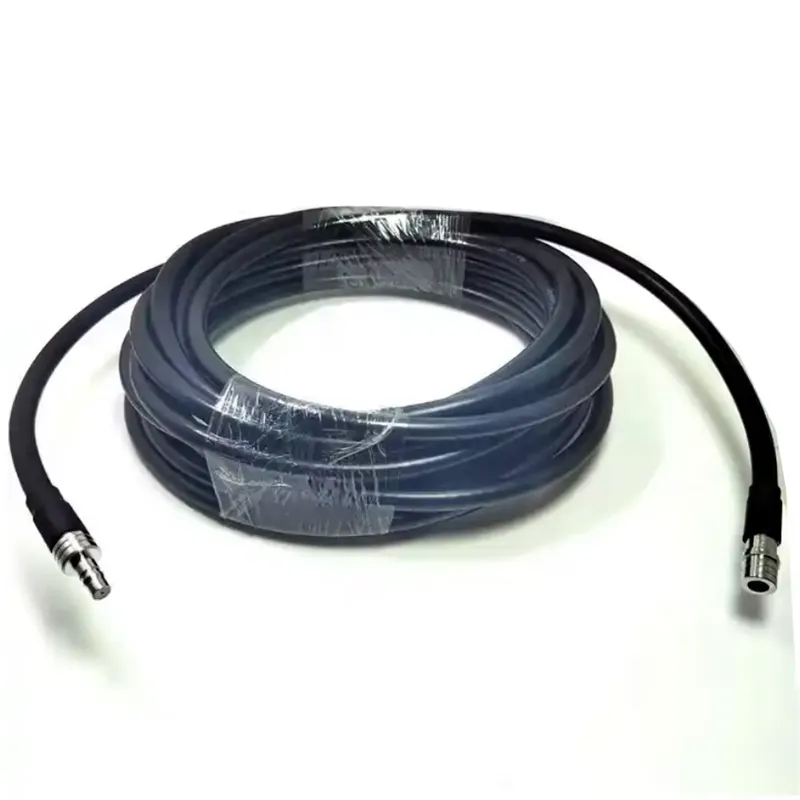
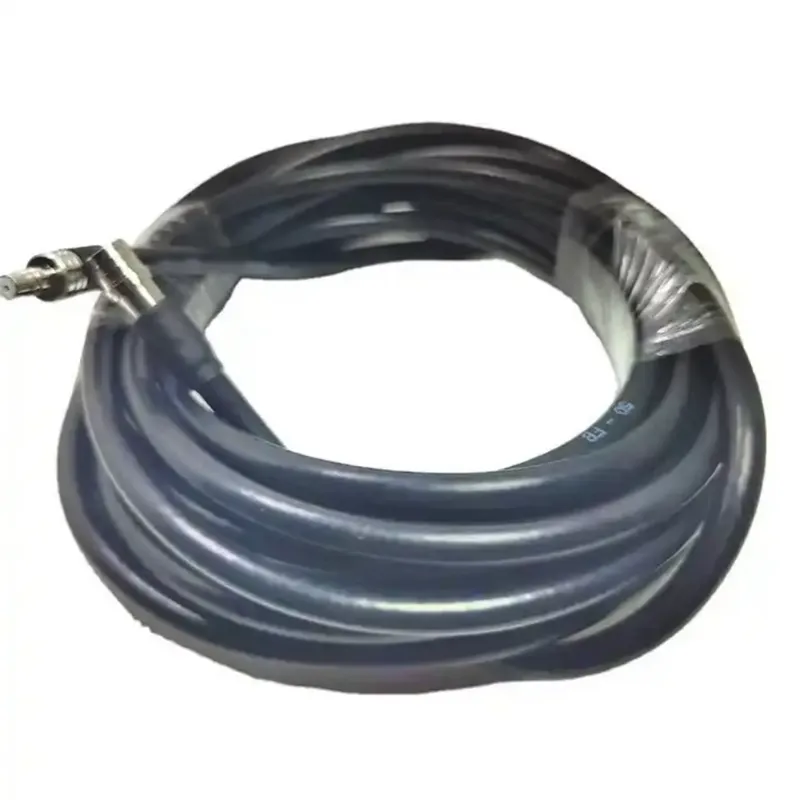
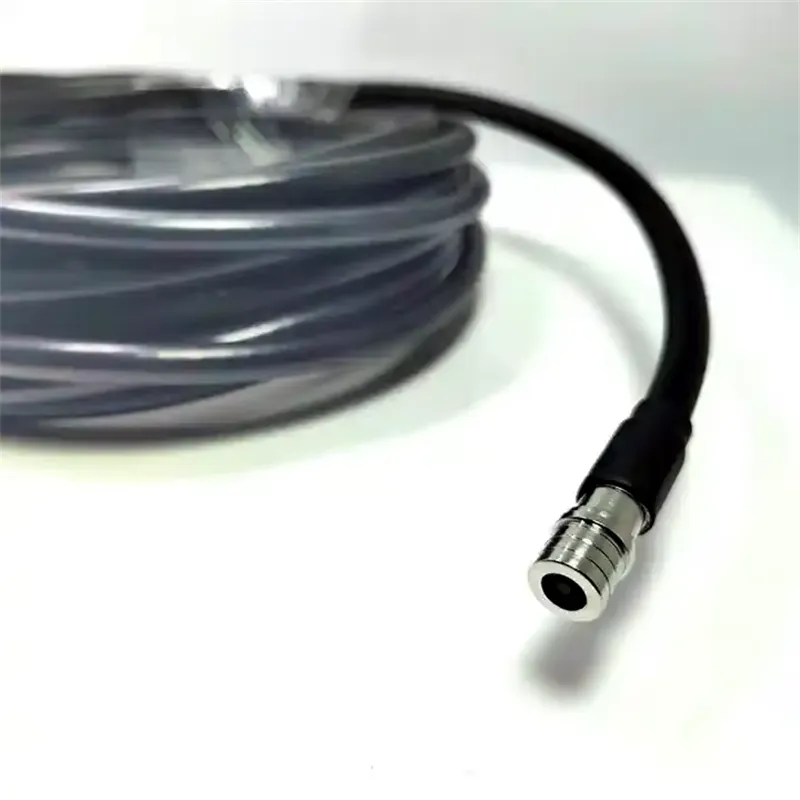
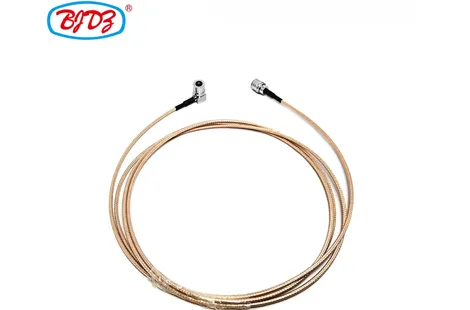
Engineered for high-performance RF signal transmission in demanding aerospace and UAV environments, this 5D-FB QMA Male to QMA Female Pigtail Jumper Extension Cable bridges the gap between internal drone transceivers and external high-gain antennas. The assembly utilizes 5D-FB low-loss coaxial cable, renowned for its superior attenuation characteristics compared to standard RG-series cables, ensuring maximum signal integrity for telemetry, video downlinks, and command/control (C2) links.
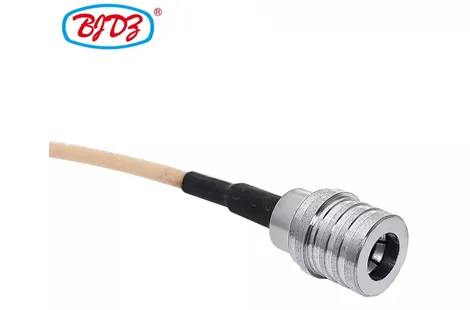
The integration of QMA quick-lock connectors provides a critical advantage in drone applications: the push-on snap mechanism maintains secure mating under high-vibration conditions where traditional threaded connectors (like SMA) may loosen over time. Manufactured directly in our ISO-certified facility at Zhenjiang Binjiang Electronic Co., Ltd., every assembly is precision-engineered and 100% VNA-tested to guarantee reliable 50-ohm performance across the operational frequency band.
Parameter | Specification | ||
Impedance | 50 Ohm | ||
Connector A | QMA Male Plug • Quick-lock snap-on mating • Brass body, gold-plated • PTFE dielectric | ||
Connector B | QMA Female Jack • Quick-lock snap-on mating • Brass body, gold-plated • PTFE dielectric | ||
Cable Type | 5D-FB Low-Loss Coaxial Cable • PE outer jacket • Bare copper center conductor • Foil + Tinned copper braid dual shield | ||
Cable OD | 7.5 mm (0.295") | ||
Frequency Range | DC to 6 GHz (Optimized for UAV/Drone bands) | ||
VSWR | ≤ 1.25:1 (DC – 3 GHz) / ≤ 1.35:1 (3 – 6 GHz) | ||
Insertion Loss | ≤ 0.15 dB/m @ 1 GHz / ≤ 0.22 dB/m @ 2.4 GHz | ||
Mating Cycles | 500 min (QMA interface) | ||
Temperature Rating | -40°C to +85°C (Standard PE jacket) | ||
Bend Radius | 37.5 mm (1.47") minimum static | ||
Compliance | RoHS 2.0, REACH, CE | ||
Parameter | Value | ||
Center Conductor | 1.26 mm Bare Copper Wire | ||
Dielectric | Foam PE (Polyethylene), 5.0 mm OD | ||
Shield 1 | Aluminum Foil Tape (100% coverage) | ||
Shield 2 | Tinned Copper Braided Wire (>95% coverage) | ||
Jacket | PE (Polyethylene), Black | ||
Velocity of Propagation | 82% | ||
Attenuation @ 400 MHz | 0.06 dB/m | ||
Attenuation @ 900 MHz | 0.10 dB/m | ||
Attenuation @ 2.4 GHz | 0.22 dB/m | ||
Attenuation @ 5.8 GHz | 0.38 dB/m | ||
Industry / Field | Specific Use Case | ||
Drones & UAVs | Main RF transmission line connecting internal VTX/telemetry modules to external fuselage antennas. | ||
FPV Systems | Low-loss video downlink cables for long-range First Person View flying (1.2 GHz, 2.4 GHz, 5.8 GHz). | ||
Ground Control Stations | Interconnecting ground-based tracking antennas with receiver modules and diversity controllers. | ||
Telecom Base Stations | Jumper cables for RRH (Remote Radio Head) to antenna connections in 4G/LTE and 5G small cells. | ||
Test & Measurement | Bench-top test fixtures linking RF signal generators to drone DUT (Device Under Test) evaluation boards. | ||
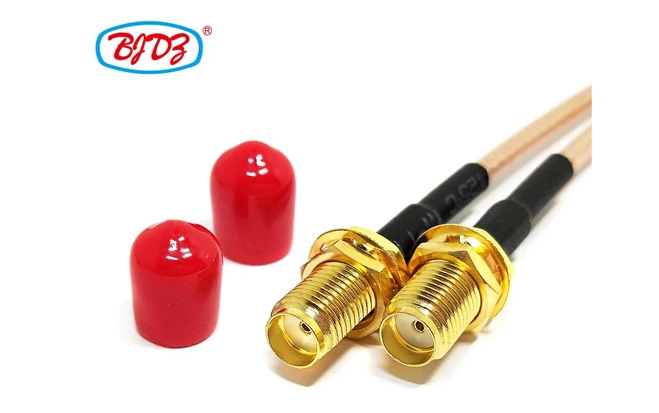
Unlike traditional threaded RF connectors, the QMA interface utilizes an internal spring mechanism for push-on mating. This design eliminates the need for torque wrenches and provides exceptional resistance to mechanical vibration—a critical requirement for multirotor drones and fixed-wing UAVs where motor-induced vibrations can cause threaded SMA connectors to back off and degrade signal quality.
The 5D-FB cable is specifically selected for its low attenuation profile. Featuring a foam PE dielectric and a dual-shield structure (aluminum foil + high-coverage tinned copper braid), it minimizes signal degradation over longer cable runs. This ensures that the transmitted RF power from the drone's VTX (Video Transmitter) or telemetry module reaches the antenna with minimal loss.
While offering the low-loss characteristics of thicker cables (like LMR-400), the 5D-FB profile maintains a manageable 7.5mm outer diameter. This provides an optimal balance between RF performance, weight, and flexibility, ensuring the cable does not add excessive payload weight or restrict the movement of gimbal-mounted antennas.
Every transition point—from the 5D-FB cable center conductor to the QMA contact pin—is precision-engineered to maintain a continuous 50-ohm impedance path. This minimizes signal reflections, ensuring optimal VSWR and preventing standing waves that could damage sensitive drone RF power amplifiers.
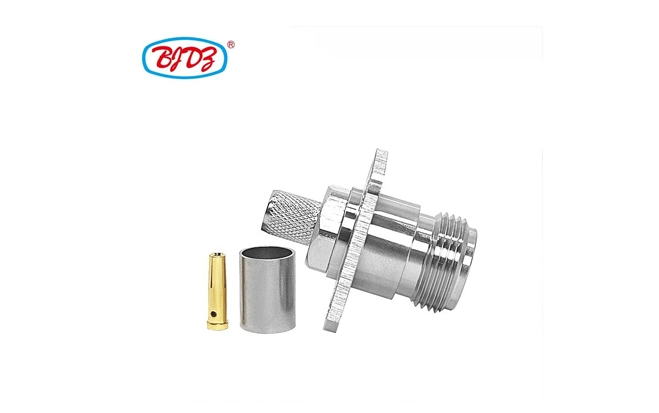
1. Precision Soldering & Crimping: Calibrated tooling specifically sized for 5D-FB ferrules ensures a gas-tight, mechanically robust connection between the cable braid and the QMA connector body.
2. Gold-Plated Contact Surfaces: Provides ultra-low contact resistance and superior corrosion resistance, ensuring long-term reliability in outdoor and humid environments.
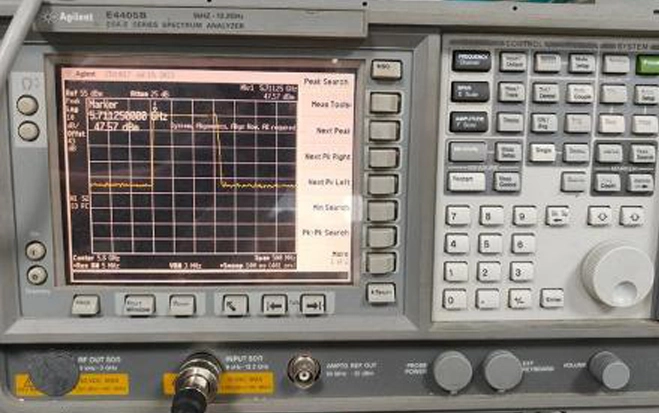
3. 100% VNA Electrical Testing: Every finished assembly is swept on a calibrated Vector Network Analyzer to verify Return Loss and Insertion Loss across the specified frequency band.
4. Mechanical Pull-Test: Random samples from each production batch undergo strict axial pull tests to validate crimp integrity and cable retention.
Option | Choices | ||
Cable Length | 10cm, 20cm, 30cm, 50cm, 100cm, Custom lengths available | ||
Connector Orientation | Straight (Standard) / 90° Right Angle (Optional for tight enclosures) | ||
Heat Shrink Boot | Optional adhesive-lined heat shrink for enhanced strain relief and moisture sealing | ||
Cable Jacket Color | Black (Standard) / Custom colors for visual cable management | ||
Labeling & Packaging | Custom labeling, anti-static PE bags, or bulk packaging | ||
Q1: Why choose QMA over SMA for drone applications?
While SMA connectors are common, they rely on threaded coupling which can loosen under the constant high-frequency vibration of drone motors. QMA connectors use a push-on snap-lock mechanism that is inherently vibration-proof and allows for tool-free, rapid mating/unmating during field maintenance.
Q2: Can this 5D-FB cable handle 5.8 GHz FPV video signals?
Yes. At 5.8 GHz, the attenuation is approximately 0.38 dB/m. For typical drone internal cable runs (e.g., 30cm to 50cm), the signal loss is negligible (less than 0.2 dB), making it highly suitable for 5.8 GHz FPV systems while providing excellent physical durability.
Q3: What is the difference between 5D-FB and standard RG-58?
5D-FB is a low-loss cable with a thicker dielectric (Foam PE) and dual shielding, resulting in significantly lower attenuation and higher shielding effectiveness compared to the solid dielectric and single-braid structure of standard RG-58.
Q4: How do I mate and unmating the QMA connectors?
To mate, align the connectors and push straight in until you hear/feel a distinct click. To unmating, pull back the outer sliding sleeve on the QMA male connector and pull straight out. Never twist or rotate the QMA connectors during mating or unmating.
1. QMA Quick-Lock: Push straight in until it clicks. Verify retention by gently pulling the connector body.
2. Minimum Bend Radius: Maintain at least a 37.5mm (1.47") bend radius on the 5D-FB cable to prevent dielectric deformation and impedance mismatches.
3. Cable Routing: Secure the cable using UV-resistant zip ties or P-clips every 15-20 cm to prevent stress on the connector joints during drone flight maneuvers.
4. Environmental Sealing: If the connection is exposed to the elements, apply self-amalgamating silicone tape over the connector joint to prevent moisture ingress.
 English