en
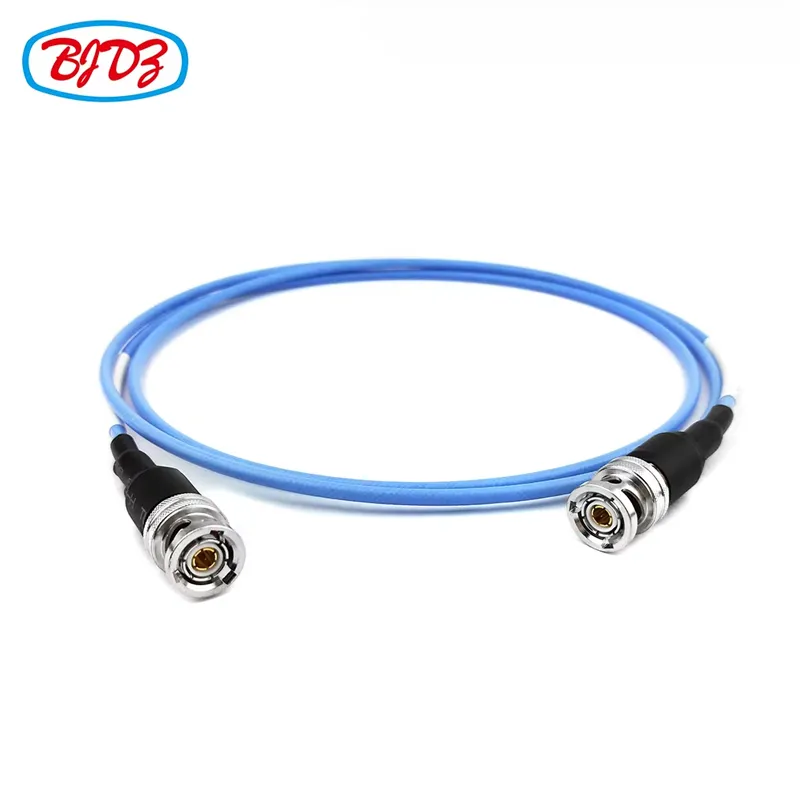
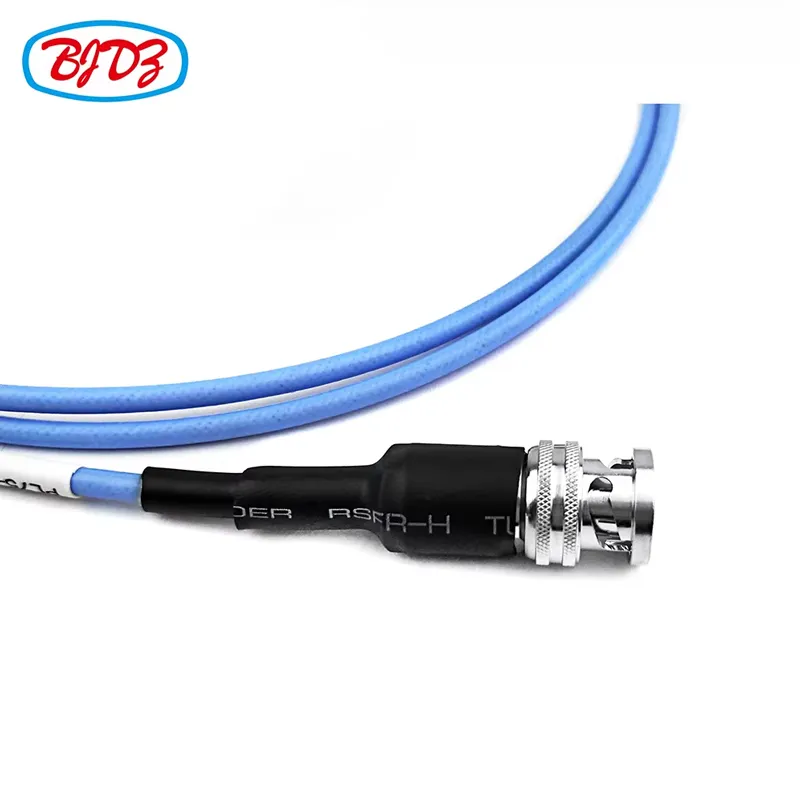
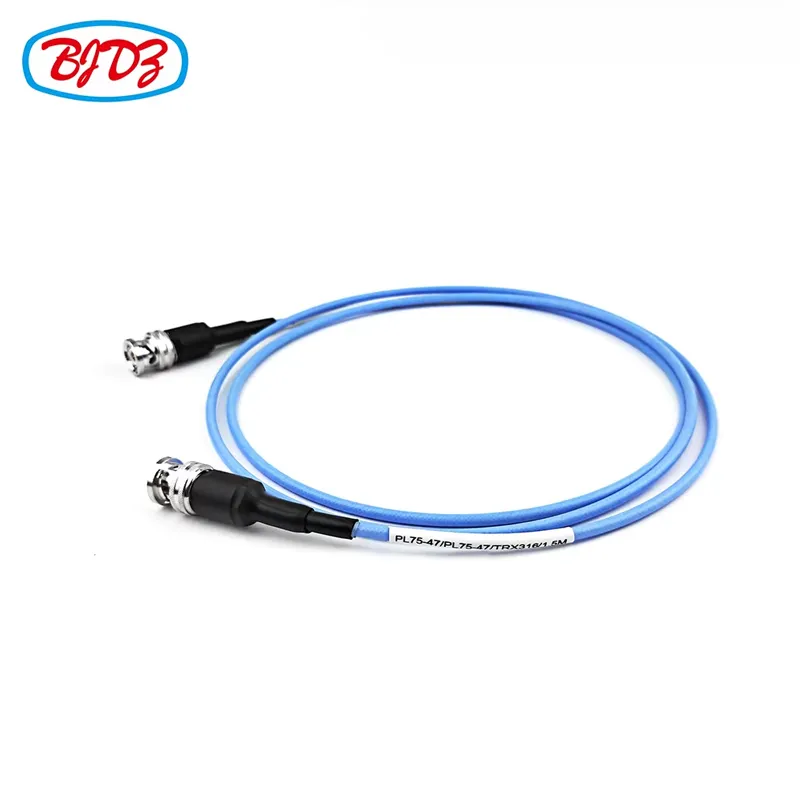
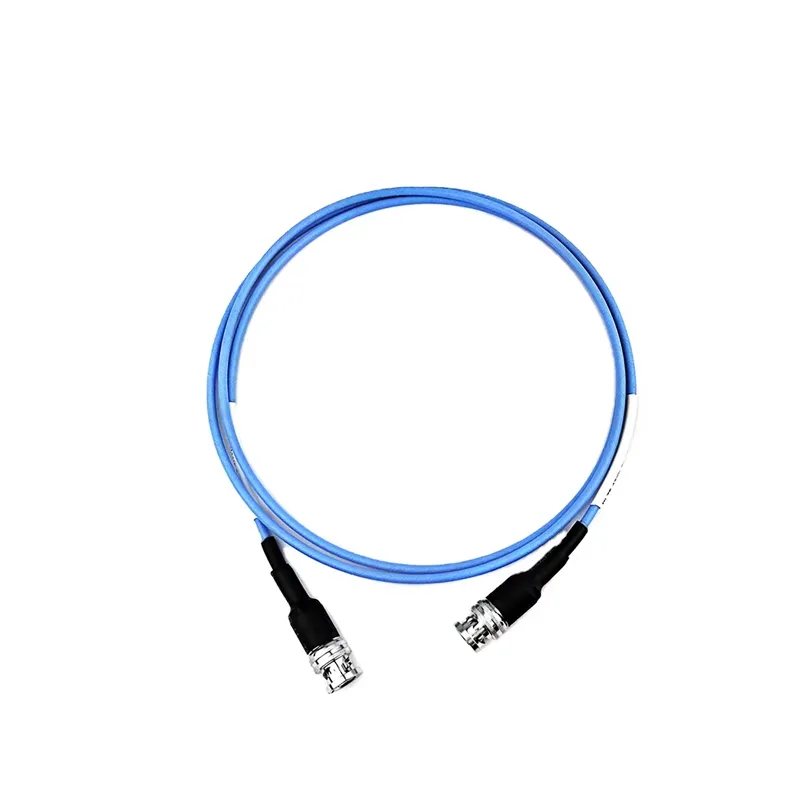
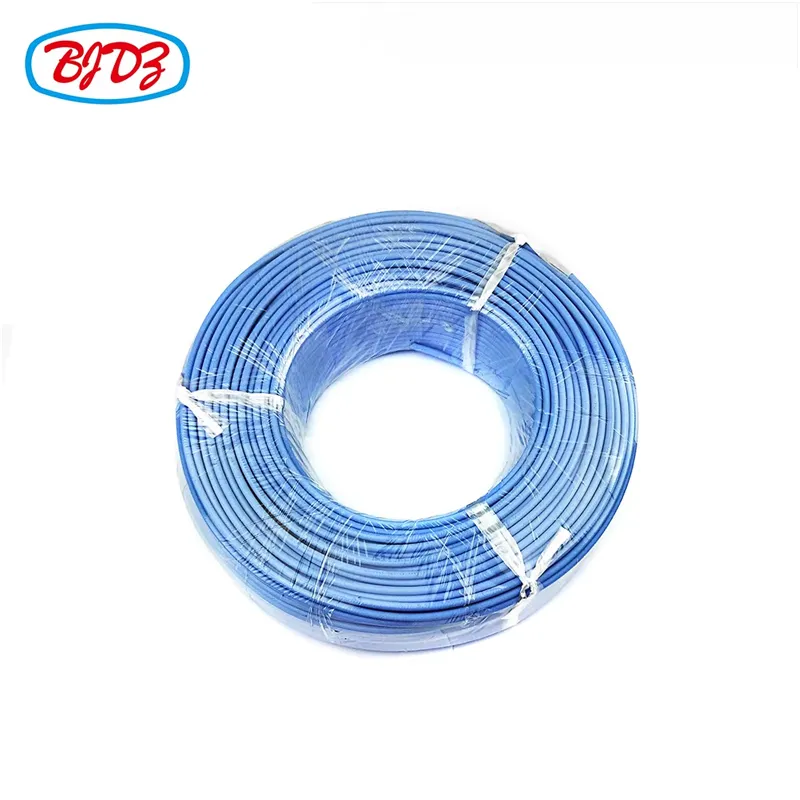
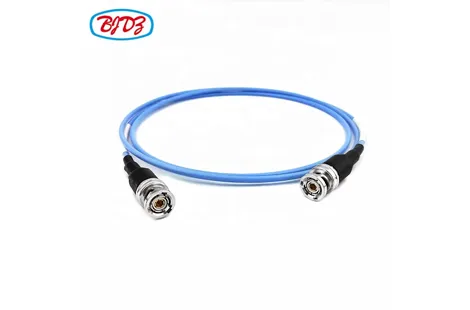
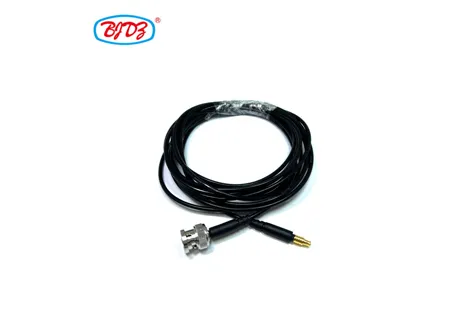
Engineered for environments demanding exceptional noise immunity and signal fidelity, this TRX316 triaxial cable assembly features three concentric conductors (inner signal conductor, intermediate shield, and outer shield) terminated with BNC Male connectors on both ends. Unlike standard coaxial cables, the triaxial design adds a third layer of shielding to eliminate ground loops and reject external interference, making it ideal for precision instrumentation, medical devices, and aerospace systems. The TRX316 cable’s ultra-thin profile (2.3 mm OD) and PTFE dielectric ensure flexibility in tight spaces while maintaining phase stability up to 6 GHz.
Parameter | Specification |
Cable Type | TRX316 (Triaxial Equivalent of RG316) |
Impedance | 50 Ω (Inner Conductor to Intermediate Shield) |
Connectors | BNC Male (Gold-Plated Brass) on Both Ends |
Conductor Structure | Three Layers: Inner Signal (26 AWG Solid Copper), Intermediate Shield (Braid), Outer Shield (Braid + Foil) |
Dielectric | PTFE (Teflon®) – Low Loss, High Temperature Stability |
Outer Diameter (OD) | 2.3 mm (0.091 inches) |
Frequency Range | DC to 6 GHz |
VSWR | ≤ 1.25:1 (DC to 6 GHz) |
Insertion Loss | ≤ 0.52 dB/ft @ 1 GHz (Inner Conductor Path) |
Shielding Effectiveness | >120 dB (Intermediate + Outer Shields Combined) |
Temperature Range | -55°C to +200°C |
Bend Radius | Dynamic: 8x OD | Static: 12x OD |
Key Applications | Precision Test Equipment, MRI Systems, Quantum Computing, Avionics Data Buses |
1. Triple-Layer Noise Suppression
Inner Shield: Blocks external EMI/RFI from reaching the signal conductor.
Outer Shield: Prevents ground-loop currents by isolating the intermediate shield from chassis ground.
Result: 10–20 dB lower noise floor vs. standard coax in high-interference environments (e.g., MRI rooms).
2. Phase Stability for Precision Timing
PTFE dielectric and consistent conductor geometry ensure minimal phase shift during flexing—critical for time-sensitive applications like radar synchronization or quantum computing control signals.
3. Ground-Loop Elimination
The isolated intermediate shield allows the outer shield to connect to chassis ground while the inner shield references signal ground, eliminating ground-loop-induced errors in sensitive measurements.
4. Space Efficiency
At just 2.3 mm OD, TRX316 delivers triaxial performance in a footprint comparable to standard RG316 coax—ideal for dense PCB routing or robotic arms.
5. BNC Male Connectors with Triaxial Compatibility
Custom-engineered BNC connectors maintain the triaxial signal path integrity, with separate contacts for inner conductor, intermediate shield, and outer shield (unlike standard BNC).
Medical Imaging: MRI gradient coils, ECG/EEG signal cabling (noise-free biopotential measurements).
Aerospace & Defense: Avionics data buses, radar test systems, satellite payload interconnects.
Quantum Computing: Qubit control lines requiring sub-microvolt signal stability.
Precision Test Equipment: Vector network analyzers (VNAs), lock-in amplifiers, and calibration standards.
Industrial Automation: High-accuracy sensor networks in EMI-heavy factories (e.g., semiconductor fabs).
Triaxial Continuity Validation: Each conductor layer tested for continuity and isolation (≥1 GΩ between shields).
Shielding Effectiveness Scan: Verified to >120 dB from 10 kHz to 6 GHz using MIL-STD-461G methods.
Phase Stability Testing: Cables flexed 10,000 cycles while monitoring phase drift (<0.5° @ 1 GHz).
3D Connector Metrology: BNC interfaces scanned for triaxial contact alignment (±0.02 mm tolerance).
PTFE Purity Check: FTIR spectroscopy confirms 99.9% pure PTFE dielectric to prevent signal absorption.
Standard Lengths: 0.5m, 1m, 2m, 3m (custom lengths up to 10m).
Custom Options: Laser-marked labels, strain relief boots, or hybrid connector configurations (e.g., BNC Male to Triaxial Sub-D).
Packaging: Vacuum-sealed anti-static bags with coiled protection; bulk reels for OEM orders.
Lead Time: 3–5 days (standard lengths); 7–10 days (custom).
MOQ: 1 unit (prototyping); volume discounts from 50 units.
Q1: How does TRX316 differ from standard RG316?
A: TRX316 adds a third conductor layer (intermediate shield) between the inner signal conductor and outer shield. This enables ground-loop isolation and 20+ dB better noise rejection—critical for sub-millivolt signal integrity.
Q2: Can I use standard BNC connectors with triaxial cables?
A: No. Standard BNC connectors short the intermediate and outer shields. Our assemblies use triaxial-specific BNC connectors with isolated contacts for all three layers.
Q3: Is TRX316 suitable for high-power applications?
A: Not recommended. Triaxial cables prioritize signal integrity over power handling. Max power: ~5W @ 1 GHz (vs. 500W for LMR400). Use for low-power precision signals only.
Q4: What’s the outer shield termination best practice?
A: Connect the outer shield to chassis ground at both ends, while the intermediate shield should tie to signal ground at one end only to prevent ground loops.
Avoid Shield Shorts: Never let intermediate/outer shields contact each other during routing.
Bend Gently: Exceeding 8x OD dynamic bend radius risks dielectric compression and phase instability.
Torque Carefully: Use 0.4–0.6 N·m on BNC connectors—over-tightening damages triaxial contact alignment.
Ground Separation: Maintain isolated ground paths for intermediate/outer shields in your system design.
Note: Specifications subject to change. Always refer to the product datasheet for critical applications.
(No contact details or time/date included as requested)
 English