en

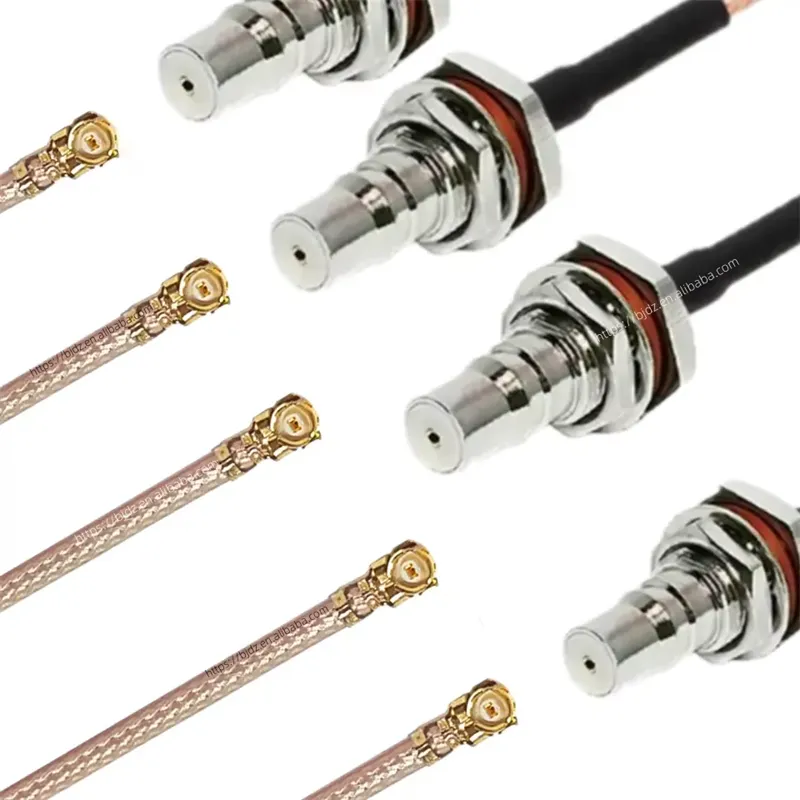
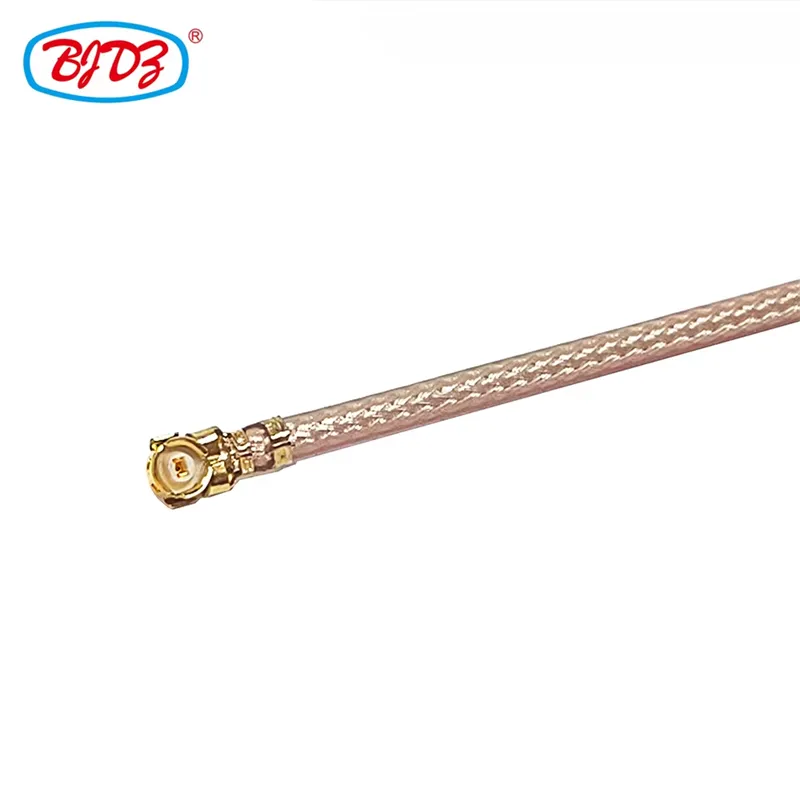
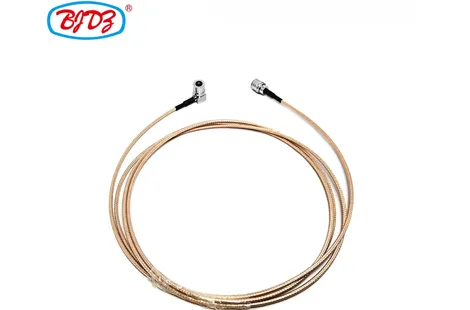
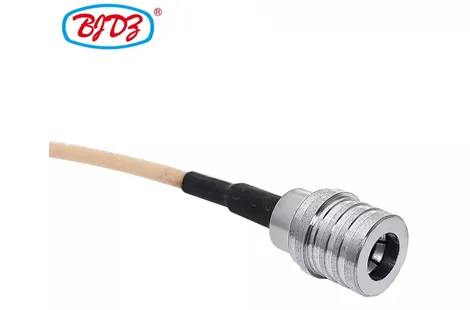
Bridging the gap between high-density PCB-level RF modules and robust external panel-mount interfaces, this QMA to U.FL RG178 RF Pigtail Cable Assembly is engineered for modern wireless communication systems. The U.FL (IPEX MHF1) connector provides an ultra-compact, surface-mount connection directly to mini-PCIe, M.2 Wi-Fi/Bluetooth cards, and embedded IoT modules. On the other end, the QMA connector offers a secure, quick-lock, push-pull mating mechanism ideal for high-density panel installations where threaded SMA connectors are impractical.
Utilizing RG178 micro-coaxial cable, this assembly features an ultra-thin 1.8mm outer diameter and a high-temperature FEP (Teflon) jacket, making it perfect for tight routing spaces inside servers, routers, drones, and handheld devices. As a direct factory supplier, we offer full customization in cable length, QMA gender (Male/Female), and panel-mount configurations, with 100% VNA testing to guarantee signal integrity from DC up to 6 GHz.
Parameter | Specification |
Impedance | 50 Ohm |
Connector A | QMA (Male or Female)• Quick-lock push-pull coupling• Panel mount or inline options• Brass body, gold-plated contact |
Connector B | U.FL / IPEX MHF1 (Plug/Male)• Ultra-low profile (2.0mm max height mated)• Surface mount PCB receptacle mating• Phosphor bronze body, gold-plated |
Cable Type | RG178 (MIL-C-17 compliant)• FEP (Teflon) outer jacket• Silver-plated copper-clad steel (SPCCS) center conductor• Silver-plated copper braid shield |
Cable OD | 1.80 mm (0.071") |
Frequency Range | DC to 6.0 GHz |
VSWR | ≤ 1.30:1 (DC – 3 GHz)≤ 1.50:1 (3 – 6 GHz) |
Insertion Loss | ≤ 0.20 dB @ 2.4 GHz (15cm assembly)≤ 0.35 dB @ 5.8 GHz (15cm assembly) |
Mating Cycles | QMA: 100 min / U.FL: 30 min |
Temperature Rating | -55°C to +200°C (RG178 FEP jacket) |
Bend Radius | 9.0 mm (0.35") minimum static |
Compliance | RoHS 2.0, REACH |
Parameter | Value |
Center Conductor | 7x32 AWG Silver-Plated Copper-Clad Steel |
Dielectric | PTFE (Solid), 0.84mm OD |
Shield 1 | Silver-Plated Copper Braid (Inner) |
Shield 2 | Silver-Plated Copper Braid (Outer) |
Jacket | FEP (Fluorinated Ethylene Propylene) |
Velocity of Propagation | 69.5% |
Attenuation @ 1 GHz | 1.40 dB/m |
Attenuation @ 2.4 GHz | 2.25 dB/m |
Attenuation @ 5.8 GHz | 3.60 dB/m |
Industry / Field | Specific Use Case |
Wi-Fi & Bluetooth Modules | Connecting internal M.2 / Mini-PCIe wireless cards to external QMA panel-mount antennas in routers and gateways. |
Server & Data Center | Routing internal GPS or management RF signals to the rear panel in 1U/2U rackmount servers where space is constrained. |
IoT & Edge Computing | Linking embedded cellular (4G/5G) or LoRa modules to external bulkhead antennas in ruggedized outdoor enclosures. |
Drones & Robotics | Providing lightweight, flexible internal RF routing for telemetry and FPV video transmitters. |
Test & Evaluation Boards | Creating custom test fixtures to route RF signals from DUT (Device Under Test) PCBs to external measurement equipment. |
1. U.FL (IPEX MHF1) Ultra-Compact Interface
The U.FL connector is the industry standard for internal wireless modules (Intel Wi-Fi cards, Raspberry Pi, Arduino shields). Our precision-molded U.FL plug ensures a secure "snap" fit onto the PCB receptacle with a low insertion force, protecting fragile SMD solder joints from mechanical stress during mating.
2. QMA Quick-Lock Mechanism
Unlike traditional SMA connectors that require a wrench and rotational torque, the QMA interface uses a push-pull snap-on mechanism. This allows for rapid mating and unmating in blind-mate scenarios and high-density environments (like server racks or telecom base stations) where there is no physical space to rotate a hex nut.
3. RG178 High-Temperature Micro-Coax
RG178 is chosen for its exceptional thermal and spatial properties:
• FEP (Teflon) Dielectric & Jacket: Can withstand reflow soldering temperatures up to 200°C, making it safe to route near heat-generating components like CPUs and power amplifiers.
• Ultra-Thin Profile: The 1.8mm OD allows multiple cables to be routed through narrow hinges, tight conduits, and miniaturized enclosures.
• Silver-Plated Shielding: Provides excellent RF shielding effectiveness (>90 dB) to prevent internal EMI/RFI interference.
4. Impedance-Matched Transition
The transition from the microscopic U.FL contact to the RG178 cable, and subsequently to the QMA bulkhead, is carefully engineered with laser-stripping and precision micro-soldering to maintain a continuous 50-ohm impedance, minimizing return loss at microwave frequencies.
• Micro-Soldering & Laser Stripping: Due to the tiny dimensions of RG178 and U.FL, we use laser wire stripping to prevent nicking the silver-plated shield, followed by precision micro-soldering under high-magnification microscopes.
• U.FL Pull-Test: Every U.FL connector undergoes a strict axial pull test (minimum 10 N) to ensure the crimp/solder joint will not detach when the cable is routed inside tight enclosures.
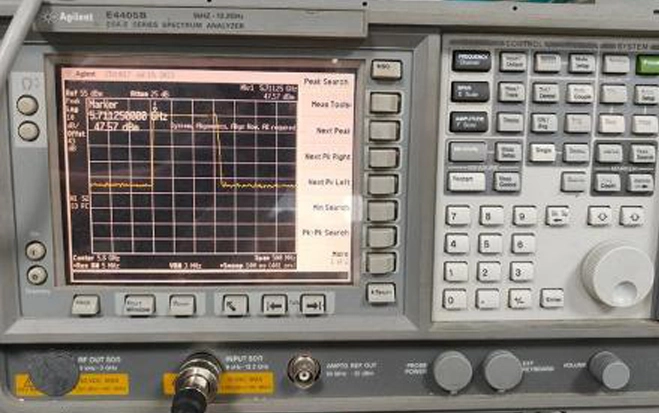
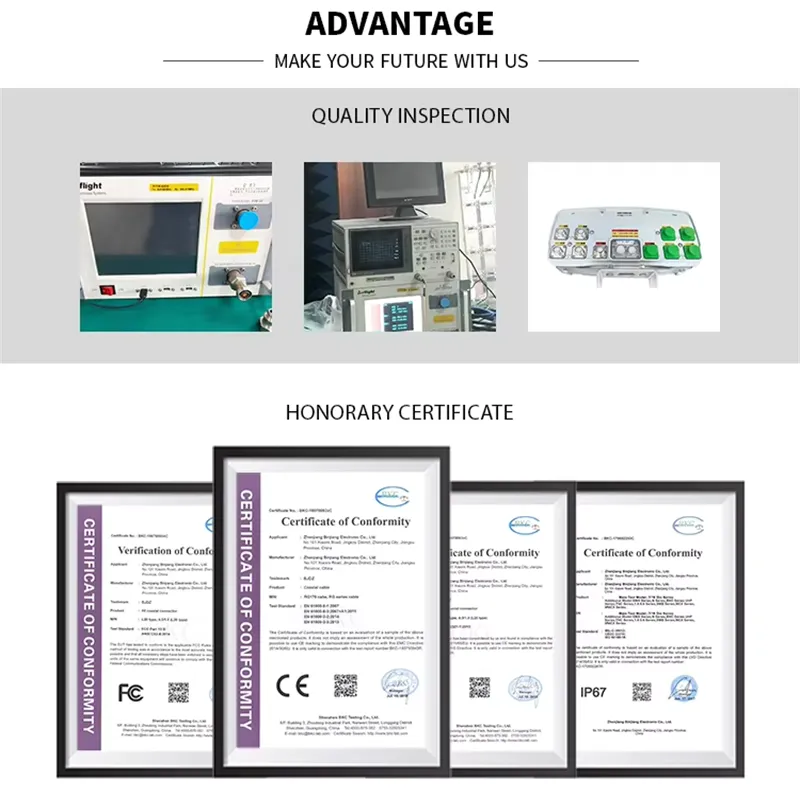
• 100% VNA Testing: All assemblies are tested on a Vector Network Analyzer for VSWR and Insertion Loss up to 6 GHz.
• Visual & Dimensional Inspection: Automated optical inspection (AOI) verifies U.FL contact alignment and QMA coupling sleeve travel.
Option | Choices |
QMA Gender | Male (Standard) / Female |
QMA Mount Type | Bulkhead Panel Mount (with nut) / Inline / PCB Edge Mount |
Cable Length | 5cm, 10cm, 15cm, 20cm, 30cm, Custom |
U.FL Orientation | Standard (Straight) / Right Angle (Optional) |
Heat Shrink / Tubing | Optional PTFE or FEP heat shrink over the U.FL joint for added strain relief |
Packaging | Individual anti-static PE bags / Tray packaging for automated assembly lines |
Q1: Is the U.FL connector on this cable Male or Female?
In industry standard terminology, the connector on the PCB is the U.FL Female (Receptacle). The connector on the cable (which this product provides) is the U.FL Male (Plug). Some suppliers confusingly call the cable end "Female" because it has a "hole" in the plastic housing, but electrically and mechanically, it is a Plug designed to mate with a PCB Receptacle.
Q2: Can I use this cable for 5G or 6 GHz Wi-Fi (Wi-Fi 6E)?
Yes, the QMA and U.FL interfaces support frequencies up to 6 GHz. However, RG178 cable has relatively high attenuation at higher frequencies. For cable lengths under 20cm, it performs excellently. If you need longer internal runs for Wi-Fi 6E (7 GHz), we recommend upgrading to a low-loss micro-coax like 1.13mm or 1.37mm specialized low-loss cable.
Q3: How much force does it take to mate/unmate the QMA connector?
The QMA quick-lock mechanism requires approximately 15 N to 20 N of axial force to push on, and a similar pull-back force on the release sleeve to disconnect. It requires zero rotational torque.
Q4: How do I safely disconnect the U.FL connector from the PCB?
Never pull on the wire! Use a specialized U.FL removal tool (a small plastic or metal pick) to gently pry under the base of the U.FL plug from the sides. Pulling the cable directly can rip the SMD pads right off the PCB.
1. U.FL Mating: Align the U.FL plug directly over the PCB receptacle. Press down evenly and firmly until you feel and hear a distinct "click."
2. U.FL Strain Relief: Once mated, route the RG178 cable so that there is no immediate tension on the U.FL joint. Use a small piece of Kapton tape or a dab of RTV silicone to secure the cable to the PCB if the device will experience vibration.
3. QMA Panel Mounting: If using the bulkhead version, ensure the panel cutout is 9.5mm. Insert the connector, add the washer and nut, and tighten to 2.5 N·m.
4. Bend Radius: Do not fold the RG178 cable at sharp 90-degree angles. Maintain a minimum bend radius of 9mm to prevent damaging the internal PTFE dielectric and altering the impedance.
 English