en
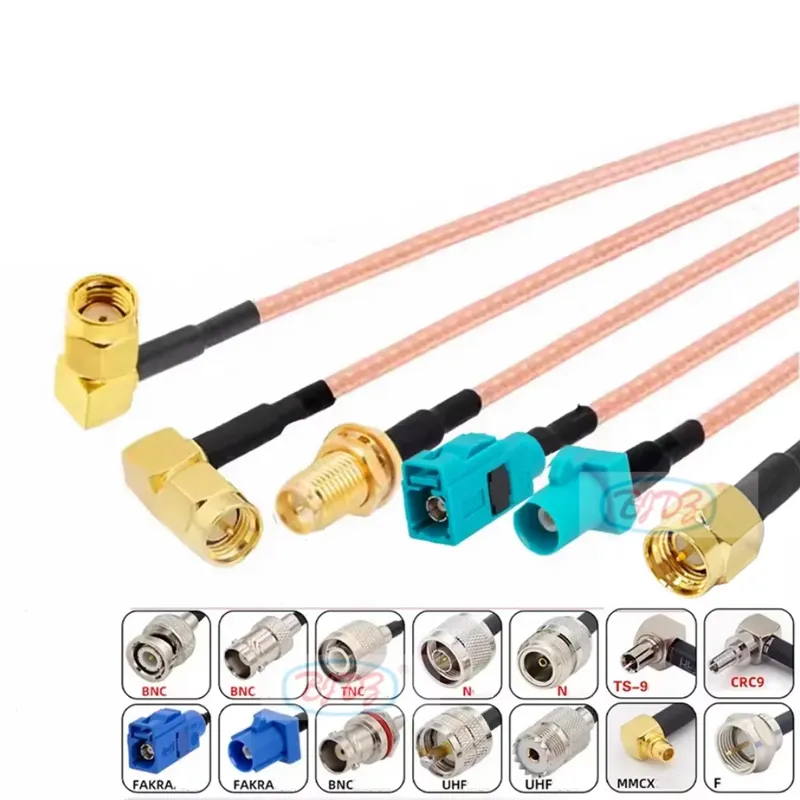
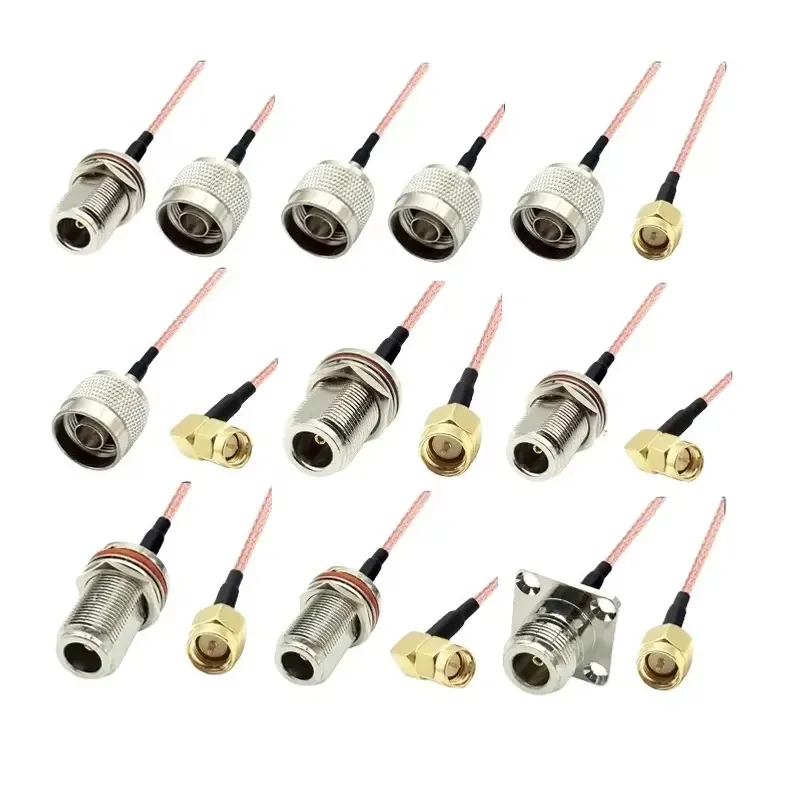
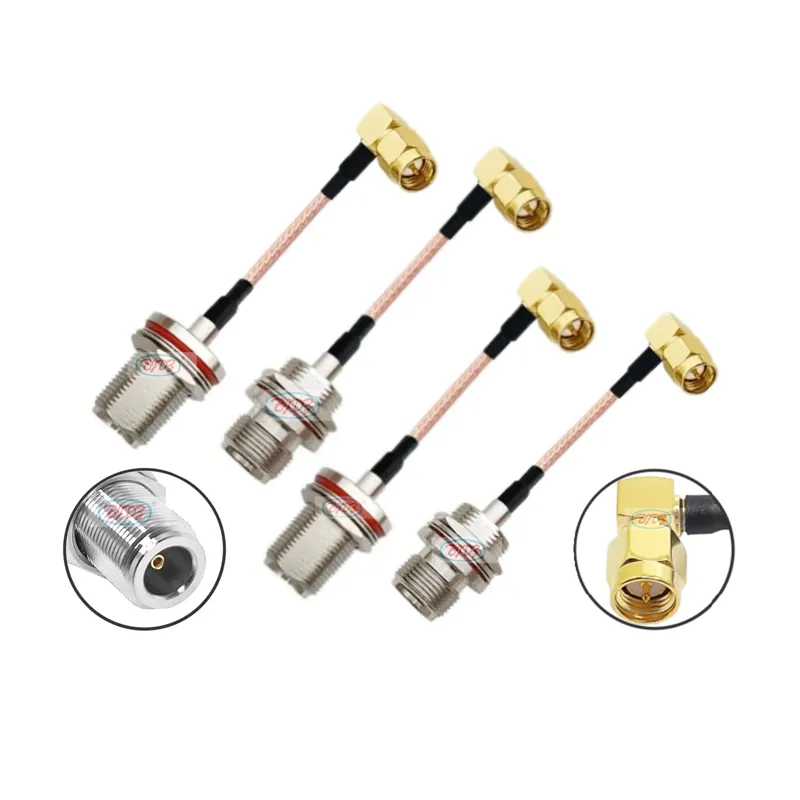
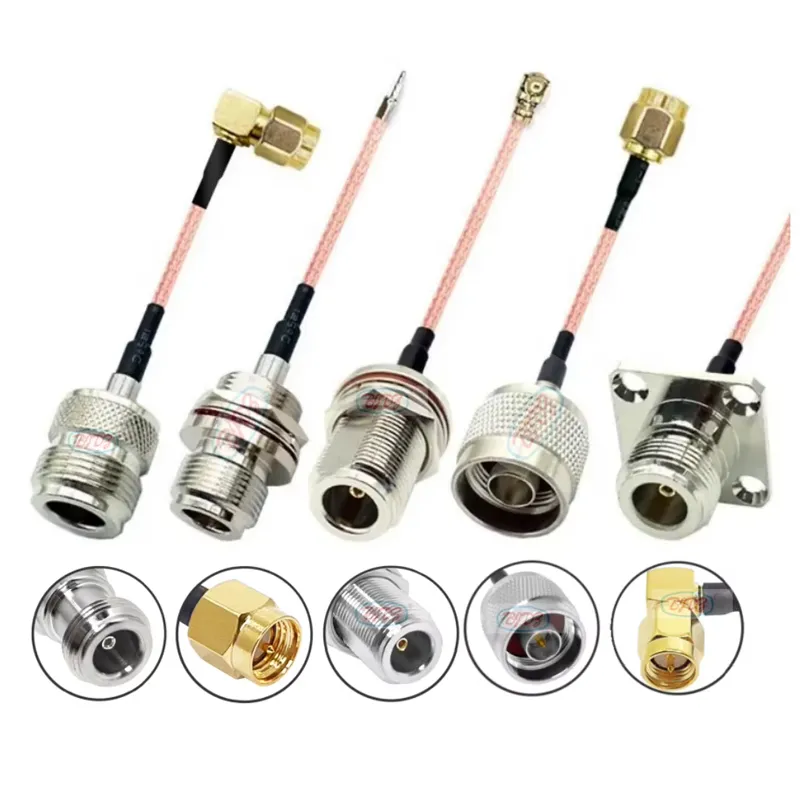
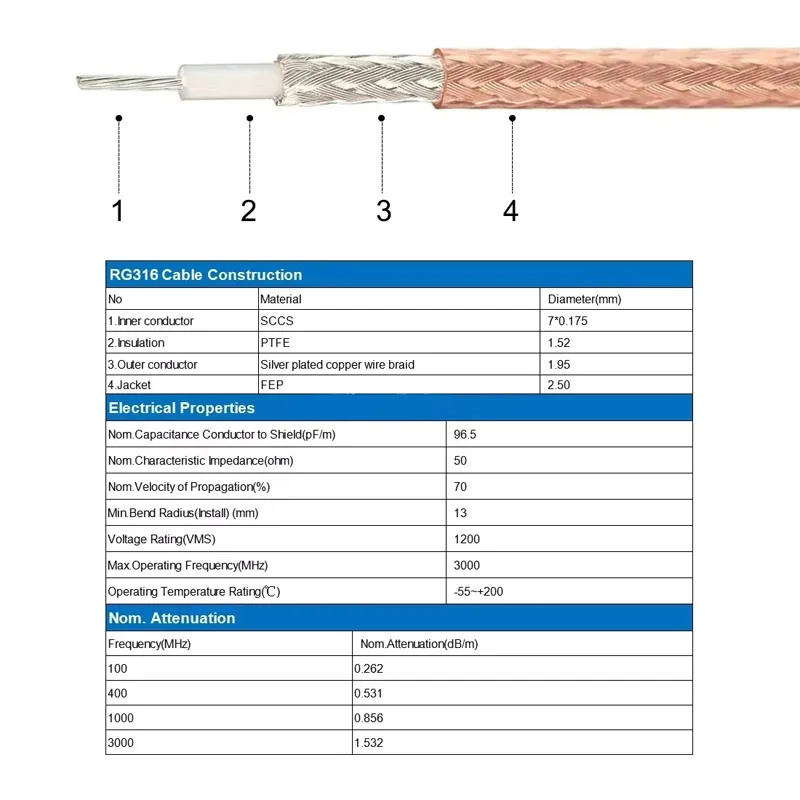
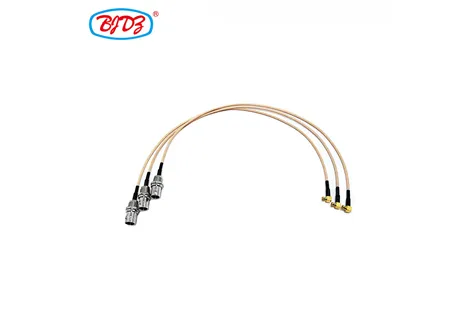
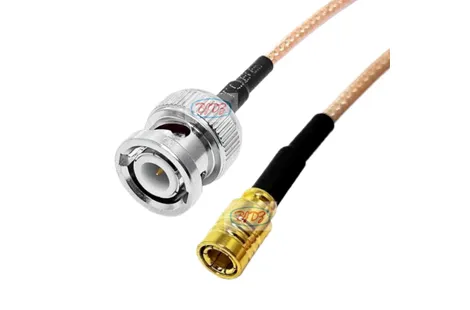
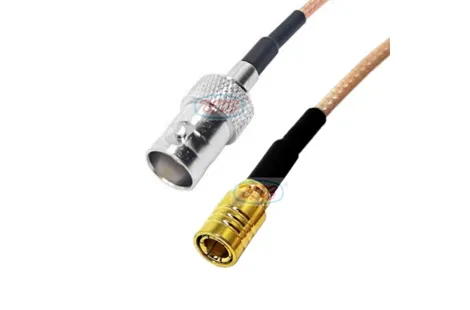
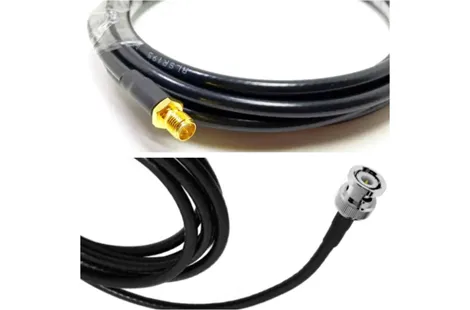
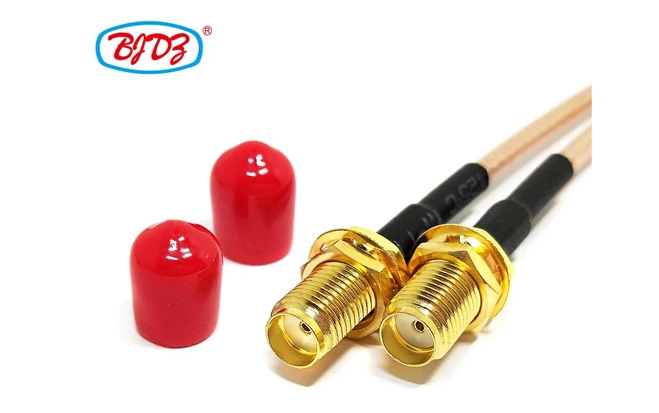
Designed for high-frequency, low-loss signal transmission in space-constrained environments, this line of RG316 RF pigtail and extension cables offers unparalleled flexibility and reliability. Utilizing PTFE (Teflon®) dielectric and solid or stranded copper conductors, these assemblies excel in applications demanding minimal signal degradation, excellent shielding, and tight bend radii. The RG316 cable’s small diameter and high flexibility make it ideal for routing through dense electronics, behind panels, or in robotic/automated systems.These assemblies are available with a wide range of connectors, including SMB, MCX, UHF (PL-259), TS9, TNC, BNC, FARKA, N, MMCX, SMA, enabling seamless integration across diverse RF equipment such as antennas, radios, test instruments, and IoT devices. Each connector is precision-engineered for secure mating, low VSWR, and resistance to vibration and environmental stress.
Parameter | Specification |
Impedance | 50 Ω |
Connector Options | SMB, MCX, UHF (PL-259), TS9, TNC, BNC, FARKA, N, MMCX, SMA (Male/Female) |
Cable Type | RG316/U (PTFE Dielectric, Copper Construction) |
Center Conductor | Solid Copper (26 AWG) or Stranded Copper (7×34 AWG) |
Dielectric | Solid PTFE (Low Loss, High Temperature) |
Shielding | Double Shield: Copper Braid (95%) + Aluminum Foil |
Outer Diameter (OD) | 1.63 mm (0.064 inches) |
Frequency Range | DC to 6 GHz |
VSWR | ≤ 1.20:1 (DC to 6 GHz) |
Insertion Loss | ≤ 0.43 dB/ft @ 1 GHz (Solid Core) |
Temperature Range | -55°C to +200°C |
Bend Radius | Dynamic: 6x OD |
Ultra-Flexibility & Small DiameterThe RG316 cable’s thin construction (1.63mm OD) and PTFE dielectric allow for tight bends and dense cabling, ideal for aerospace, medical devices, and robotics. Its flexibility reduces stress on connectors during repeated movements.
PTFE Dielectric for Low Loss & DurabilityPTFE offers exceptional electrical stability, low capacitance, and high resistance to chemicals, moisture, and temperatures up to 200°C. This ensures consistent performance in harsh environments and prevents dielectric breakdown.
Dual-Shield for Superior EMI/RFI RejectionThe copper braid + aluminum foil shielding provides >95% coverage, protecting sensitive signals from interference and maintaining EMC compliance in noisy industrial or automotive settings.
Connector Diversity & PrecisionEvery connector (e.g., SMB, MCX, MMCX) is CNC-machined to tight tolerances and gold-plated for corrosion resistance and low contact resistance. Threaded connectors (TNC, N-Type) ensure secure mating under vibration.
Copper Conductors for EfficiencySolid core variants excel in static installations, while stranded cores offer maximum flexibility without sacrificing conductivity, crucial for moving parts or robotic arms.
Wireless Communication: Base stations, small cell antennas, IoT gateways, and point-to-point links.
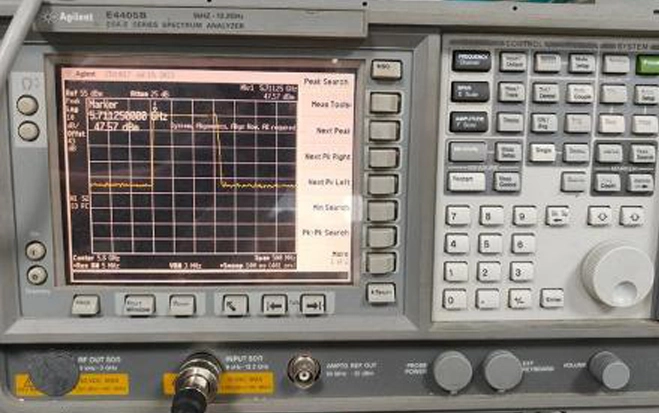
Test & Measurement: Connecting vector network analyzers (VNAs) to RF fixtures or probes.
Medical Devices: MRI systems, ultrasound equipment, and wearable telemetry.
Aerospace & Defense: Avionics, satellite communications, and radar systems.
Automotive: Telematics antennas, V2X communication, and infotainment systems.
Industrial IoT: Sensor networks, factory automation, and RFID systems.
100% VNA Testing: Each cable is swept for insertion loss, VSWR, and impedance continuity.
Crimp Pull Strength: Connectors undergo mechanical stress tests to exceed MIL-STD requirements.
Environmental Testing: Samples are subjected to temperature cycling (-55°C to +200°C) and humidity tests.
3D Inspection: Connectors are optically scanned for defects, ensuring perfect mating surfaces.
Shield Continuity Test: Automated systems verify 100% coverage of the dual-shield layer.
Coiling Protection: Cables are coiled on non-static polyethylene reels or individually wrapped to prevent kinks.
Labeling: Includes part number, connectors, length, and date code for traceability.
MOQ: 1 piece (prototyping); bulk discounts from 50 units.
Lead Time: Stock lengths ship in 24–48 hours. Custom lengths: 3–7 days.
Customization: Optional heat shrink tubing, strain relief boots, or laser marking.
Q1: Can RG316 replace RG174 in my application?
A: Yes, if space is limited. RG316 has similar performance but is 40% thinner, offering better flexibility. RG174 may be preferred for higher power handling.
Q2: Which connector is best for high vibration environments?
A: Threaded connectors (TNC, N-Type) offer superior retention. MCX and MMCX have snap-on locks suitable for moderate vibration.
Q3: Is RG316 suitable for outdoor use?
A: Yes, with proper sealing. While PTFE is weather-resistant, we recommend jacketed versions or applying waterproof tape to connectors for long-term outdoor exposure.
Q4: What’s the maximum power rating for RG316?
A: Up to 5W @ 6 GHz (dependent on connector type). Solid core cables handle more power than stranded.
Bend Radius: Avoid sharp bends ≤ 6x OD (static) or 10x OD (dynamic) to prevent signal loss.
Torque Limits: Use specified torque wrenches for threaded connectors (e.g., TNC: 0.6–0.8 N·m).
Avoid Over-Crimping: Incorrect crimping can damage the dielectric, increasing VSWR.
Grounding: Ensure shields are connected to chassis ground to prevent EMI loops.
Request a Quote or Custom Design:Contact our engineering team for hybrid connector combinations, cable lengths, or specialized shielding solutions.
Note: Specifications subject to change. Always refer to product datasheet for critical applications.
 English