en
Meta Title (SEO):
BNC Male to SHV High Voltage Cable Assembly | RG58 5000V DC Rated Jumper for HV Test Sets, Particle Detectors & Lab Equipment
Meta Description (SEO):
Precision BNC male to SHV coaxial cable assembly with RG58 50Ω cable. Rated for 5000V DC high voltage testing applications. Bayonet-locking safety design prevents accidental disconnection under voltage. Ideal for hipot testers, particle detectors, X-ray equipment, and laboratory HV power supplies. ROHS compliant, factory tested.
Purpose-Built for Safe High Voltage Signal & Power Transmission
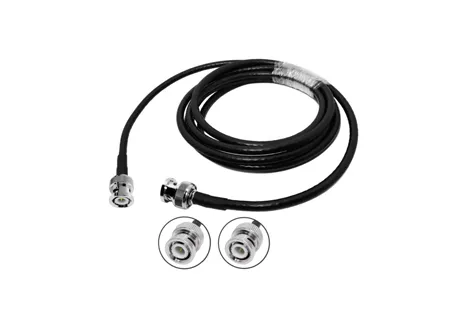
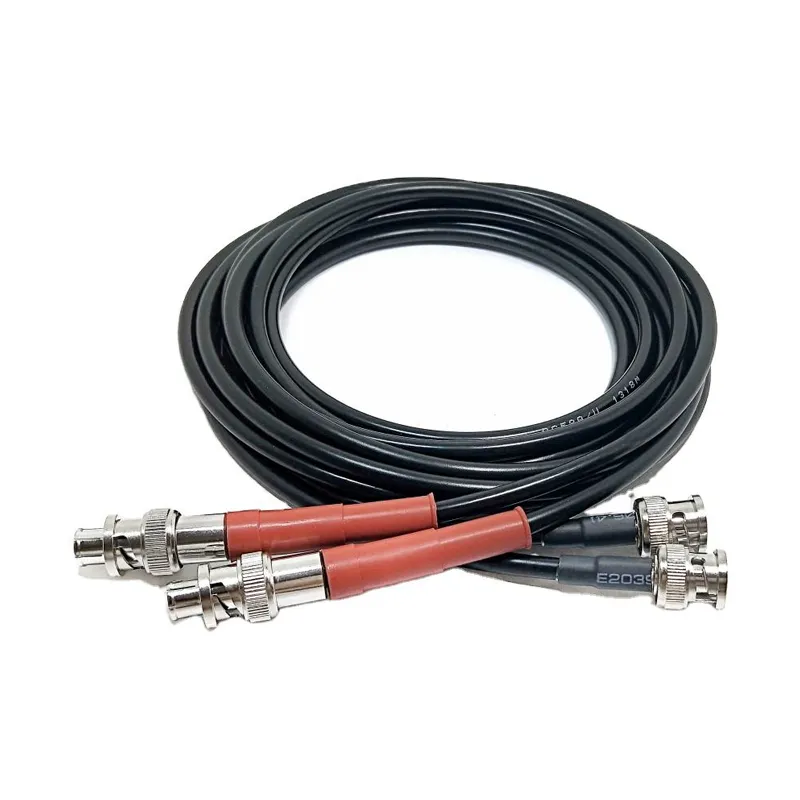
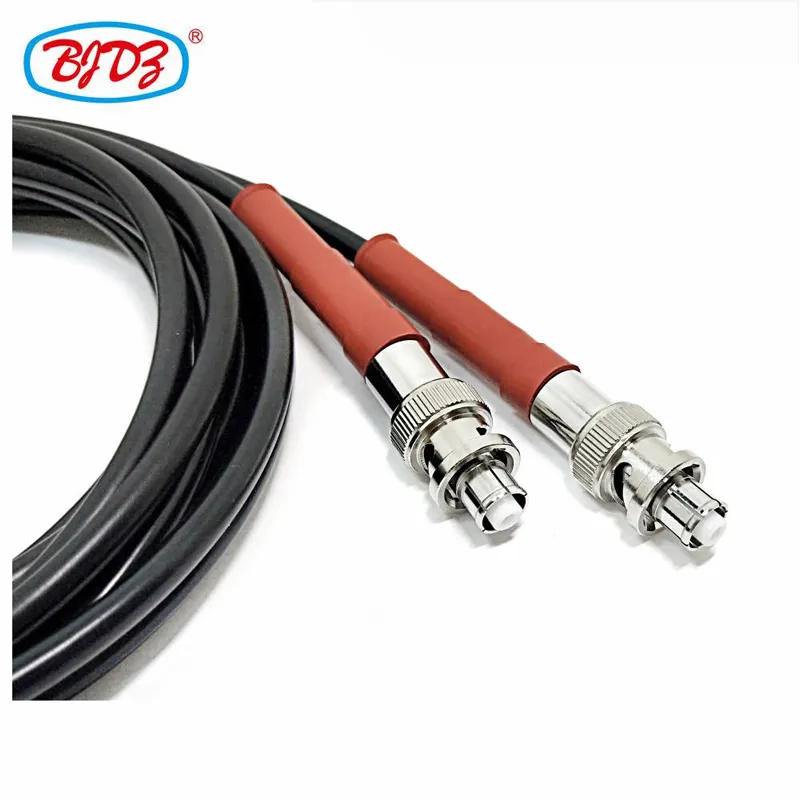
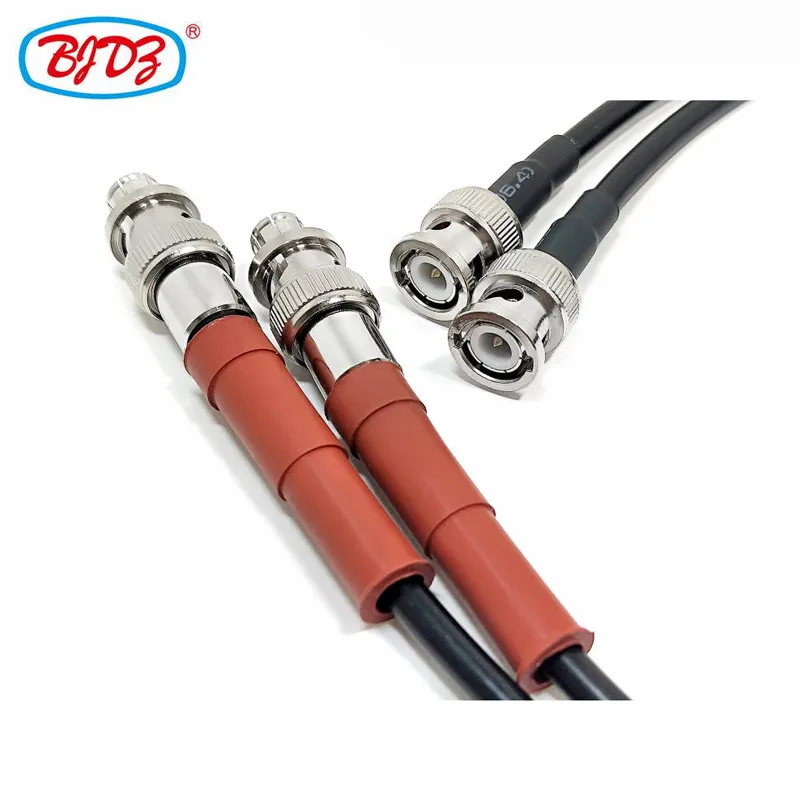
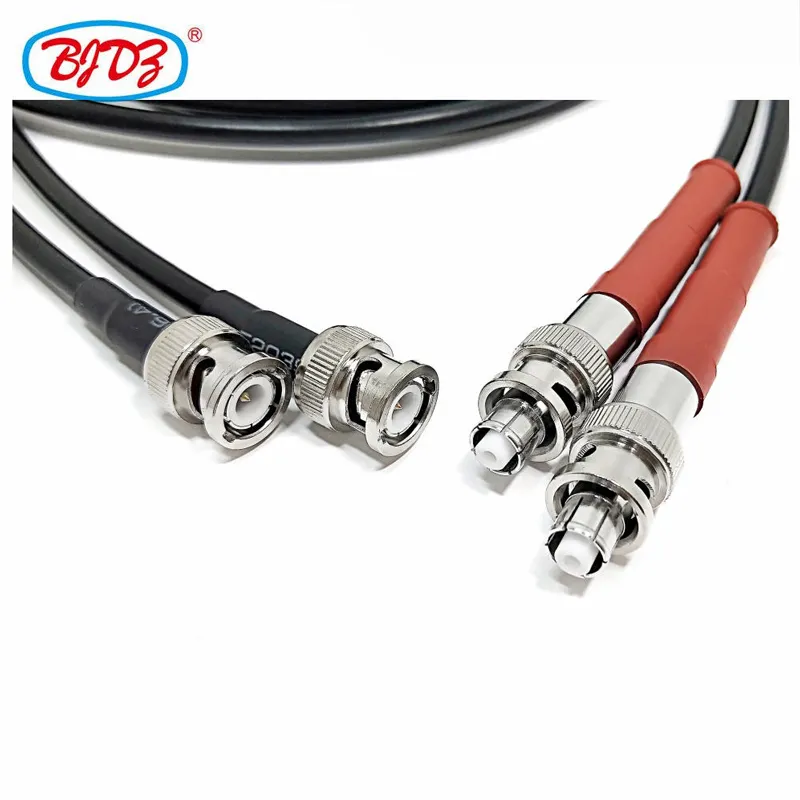
This BNC Male to SHV cable assembly bridges standard 50Ω test equipment (via BNC male) to high voltage SHV ports found on hipot testers, particle detectors, X-ray generators, and laboratory HV power supplies. The SHV (Safe High Voltage) connector features a protruding dielectric insulator and bayonet-locking coupling specifically engineered to prevent accidental disconnection under voltage and eliminate arcing hazards. Rated for 5000V DC continuous (mated pair rated up to 12,000V DC per Radiall specs), this assembly uses RG58 coaxial cable (50Ω) for reliable signal integrity in demanding high voltage environments.
CRITICAL SAFETY WARNING: SHV connectors are designed to be non-mateable with standard BNC/MHV connectors. Never force a BNC connector into an SHV port—this can cause catastrophic arcing, equipment damage, and severe electrical shock hazard.
Parameter | Specification |
Cable Type | RG58/U (50Ω, 4.95 mm OD) |
Impedance | 50 Ohm (Non-constant impedance at SHV interface—standard for HV applications) |
Frequency Range | DC to 2 GHz (SHV interface limited); DC to 5 GHz (RG58 cable) |
Voltage Rating | 5000V DC (standard continuous); 12,000V DC (mated pair, per Radiall) |
Test Voltage | 10 kV DC (unmated); 12 kV DC (mated) |
Current Rating | 5A maximum (SHV connector) |
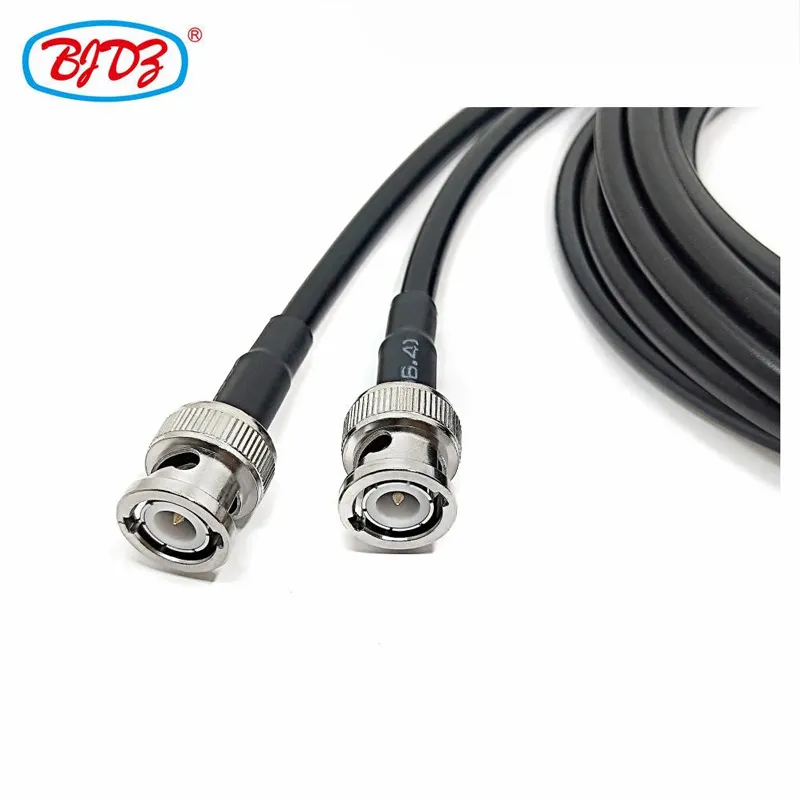
Connector A | BNC Male Plug Bayonet coupling, nickel-plated brass 50Ω impedance match PTFE dielectric 1.0–2.0 Nm torque rating |
Connector B | SHV Plug (Male) Bayonet-locking coupling (safety latch) Protruding PTFE insulator (arc prevention) Non-mateable with BNC/MHV Nickel-plated brass body, gold-plated center contact Interface OD: ~9.70 mm |
Cable Construction | Center Conductor: 20 AWG stranded tinned copper (19×0.18 mm) Dielectric: Solid PE (2.95 mm OD) Shield: 95% tinned copper braid Jacket: PVC (-20°C to +80°C), flame-retardant (UL 1581 VW-1) |
Insertion Loss | ≤ 0.22 dB/m @ 400 MHz; ≤ 0.35 dB/m @ 1 GHz (RG58 cable) |
VSWR | ≤ 1.25:1 (DC–1 GHz at BNC end); SHV end non-constant impedance (typical for HV) |
Standard Lengths | 30 cm, 50 cm, 100 cm; Custom: 15–500 cm |
Temperature Range | -55°C to +155°C (connector); -20°C to +80°C (PVC jacket cable) |
Mating Durability | ≥ 500 cycles (SHV connector per IEC 60169) |
Key Certifications | ROHS, CE, ISO 9001, IEC 60169-16 (SHV interface standard) |
Rated Power | 1000W @ 1 GHz (SHV connector) |
1. Protruding Dielectric Insulator (Arc Prevention)
SHV connector features an extended PTFE insulator that protrudes beyond the outer conductor
Prevents surface tracking and arcing at voltages above 1000V
Creates a longer creepage path (>12 mm) compared to standard BNC (<3 mm)
Critical: This design physically prevents mating with standard BNC connectors—a deliberate safety interlock
2. Bayonet-Locking Safety Mechanism
Positive-lock bayonet coupling ensures the connector cannot be accidentally pulled apart while energized
Requires intentional twist-and-pull to disconnect—preventing operator shock hazard
Visual confirmation of secure mating via bayonet alignment marks
3. Non-Mateable with BNC/MHV (Deliberate Incompatibility)
Connector | Mateable with SHV? | Risk if Forced |
Standard BNC | ❌ NO | Arcing, equipment damage, shock hazard |
MHV | ❌ NO | Partial contact, intermittent arcing |
SHV | ✅ YES | Safe, rated operation |
4. RG58 Cable for Flexible HV Routing
4.95 mm OD provides flexibility for bench-top HV test setups
95% braid shielding minimizes EMI interference with sensitive measurement equipment
Stranded center conductor withstands repeated flexing in test environments
Application | Use Case |
Hipot (Hi-Potential) Testers | Connecting HV test set output to device under test (DUT) for dielectric withstand testing |
Particle Detectors | Bias voltage supply to Geiger-Müller tubes, proportional counters, and PMTs |
X-Ray Equipment | HV signal routing in medical/industrial X-ray generators (≤5 kV control circuits) |
Mass Spectrometers | Ion source bias and detector HV supply connections |
Laboratory HV Power Supplies | Output connections to Glassman, Spellman, and Bertan HV supplies |
Semiconductor Testing | Wafer probe station HV bias connections for breakdown voltage characterization |
Electrostatic Precipitators | Control signal and monitoring connections in industrial air filtration |
Nuclear Instrumentation | NIM/CAMAC module HV distribution to detector arrays |
1. High Voltage Dielectric Withstand Test
Every assembly undergoes hipot testing at 6 kV DC (120% of rated voltage) for 60 seconds
Leakage current measured: < 0.5 mA (pass criteria)
Partial discharge test: < 5 pC at 5 kV (per IEC 60270)
2. SHV Connector Integrity Verification
Bayonet engagement force: 15–25 N (ensures secure latch without over-stress)
Contact resistance: ≤ 2 mΩ (center conductor); ≤ 1 mΩ (outer conductor)
Insulation resistance: ≥ 10 GΩ at 1000V DC (between center and shield)
3. RG58 Cable Validation
TDR (Time Domain Reflectometry): Confirms 50Ω impedance continuity along entire cable length
Shield effectiveness: ≥ 40 dB attenuation of external EMI (per IEC 61196-1)
Flex life: 5,000+ cycles at 10× cable OD bend radius
4. Traceable Documentation
Includes individual test certificate with:
Hipot test result (pass/fail + leakage current)
VSWR sweep data (DC–2 GHz)
Serial number for traceability
1. Standard Packaging: Each assembly individually sealed in anti-static bag with:
HIGH VOLTAGE WARNING label (IEC 60417-5036 symbol)
SHV safety mating guide (prevents BNC/MHV misconnection)
Voltage derating chart (temperature vs. max voltage)
2. Lead Time: 24 hours for stock lengths (30/50/100 cm); 3–5 days for custom
3. MOQ: 1 unit (stock); custom lengths require 10+ units
4. Bulk Orders: Serialized with HV test certificates archived for 10 years
Q1: Can I use a standard BNC cable instead of SHV for high voltage?
A: ABSOLUTELY NOT. Standard BNC connectors are rated for only 500V RMS (≈700V peak). At 5000V, BNC connectors will:
Q2: What's the difference between SHV and MHV?
A: | Feature | SHV | MHV |
| Voltage Rating | 5000V DC (12 kV mated) | 2000V DC |
| Safety Lock | Bayonet (positive lock) | Push-on (no lock) |
| BNC Mateable? | NO (deliberate) | YES (hazardous) |
| Arc Prevention | Protruding insulator | Standard insulator |
MHV can accidentally mate with BNC, creating a hidden HV hazard. SHV was specifically designed to eliminate this risk.
Q3: Is RG58 suitable for continuous 5000V operation?
A: Yes for signal/low-current applications. RG58's solid PE dielectric (2.95 mm thickness) has a breakdown voltage of ~10 kV DC. However:
Q4: Can this cable be used in vacuum chambers?
A: Not recommended in standard form. PVC outgassing in vacuum can contaminate sensitive equipment. For vacuum applications, specify:
Q5: What's the maximum frequency for HV signal transmission?
A: SHV connectors are rated to 2 GHz, but impedance is non-constant at the SHV interface (designed for HV, not RF precision). For:
ALWAYS de-energize before connecting/disconnecting. SHV bayonet lock prevents accidental disconnect, but live disconnection can still cause lethal arcing.
Verify mating is complete before applying voltage. Partially engaged SHV connectors can arc at >3 kV.
Inspect insulator before each use. Cracked or contaminated PTFE insulators reduce creepage distance and can cause surface flashover.
Never use in wet or high-humidity environments without IP-rated boot/shroud. Moisture reduces surface resistivity by >90%.
Ground the shield at the BNC end for operator safety. Floating shields can accumulate lethal static charge.
Equipment Type | Common Models | SHV Port Location |
Hipot Testers | Hipotronics 712-10, Associated Research 3705 | HV output terminal |
HV Power Supplies | Glassman FJ Series, Spellman SL Series, Bertan 205 | Front panel HV output |
Particle Detectors | Canberra GC Series, Ortec GMX Series | HV bias input (rear panel) |
X-Ray Generators | Oxford Instruments Ultra, Bruker S1 TITAN | Control circuit HV connector |
Mass Spectrometers | Thermo Fisher LTQ, Agilent 5977B | Ion source HV bias |
Nuclear Instrumentation | CAEN N1470H, WIENER MPOD HV modules | Front panel SHV output |
Download SHV Safety Guide (PDF) | Request Custom Length Quote
Includes free HV test certificate with every assembly.
Need higher voltage? → Explore SHV-to-SHV Assemblies (12 kV rated) | RG213 HV Cables (10 kV)
 English