en
Meta Title (SEO):
7/16 DIN Male to BNC Male RF Jumper | LMR400 & RG213 Low-Loss Cable Assembly for Base Station Testing & Broadcast Monitoring
Meta Description (SEO):
Factory-direct 50Ω RF jumper featuring a rugged 7/16 DIN (L29) male plug to BNC male plug. Built with ultra-low-loss LMR400, RG213, or RG8 coaxial cables. Ideal for cell tower maintenance, broadcast signal sampling, and connecting high-power RF ports to spectrum analyzers. ROHS compliant, 100% VSWR tested.
Bridging High-Power Infrastructure with Precision Test Equipment
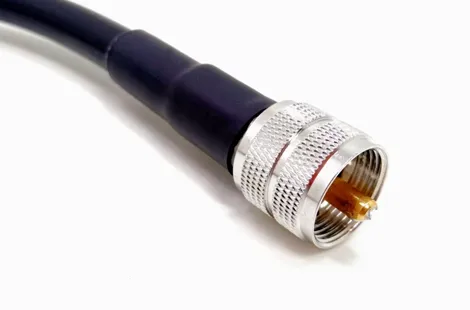
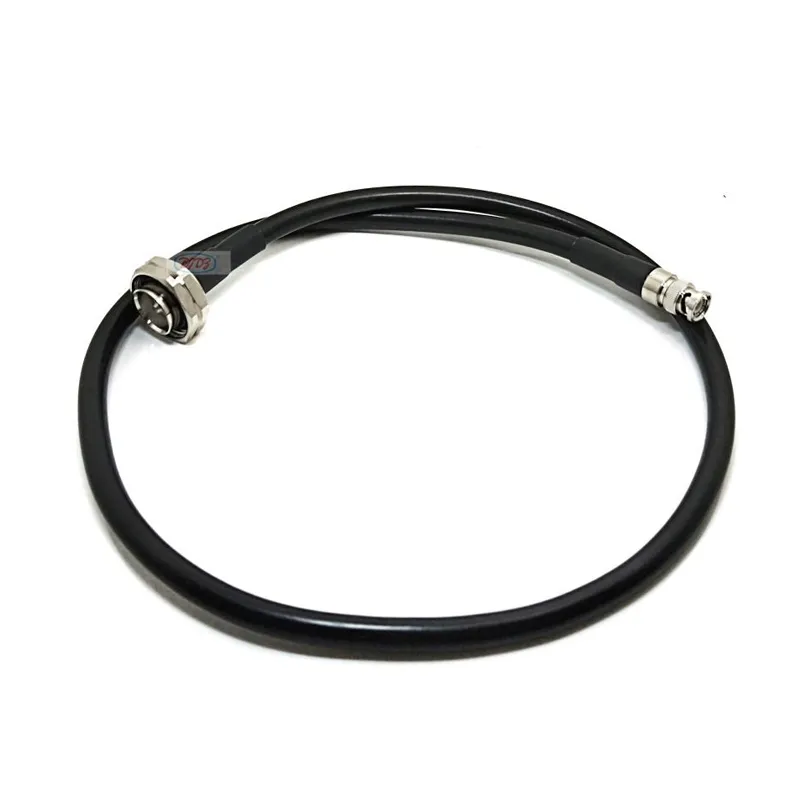
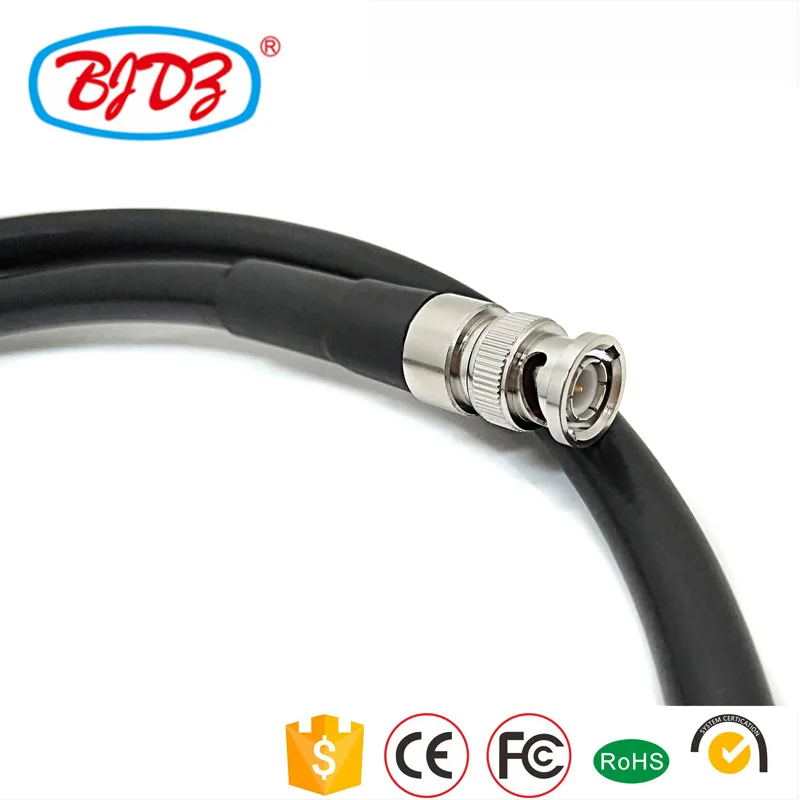
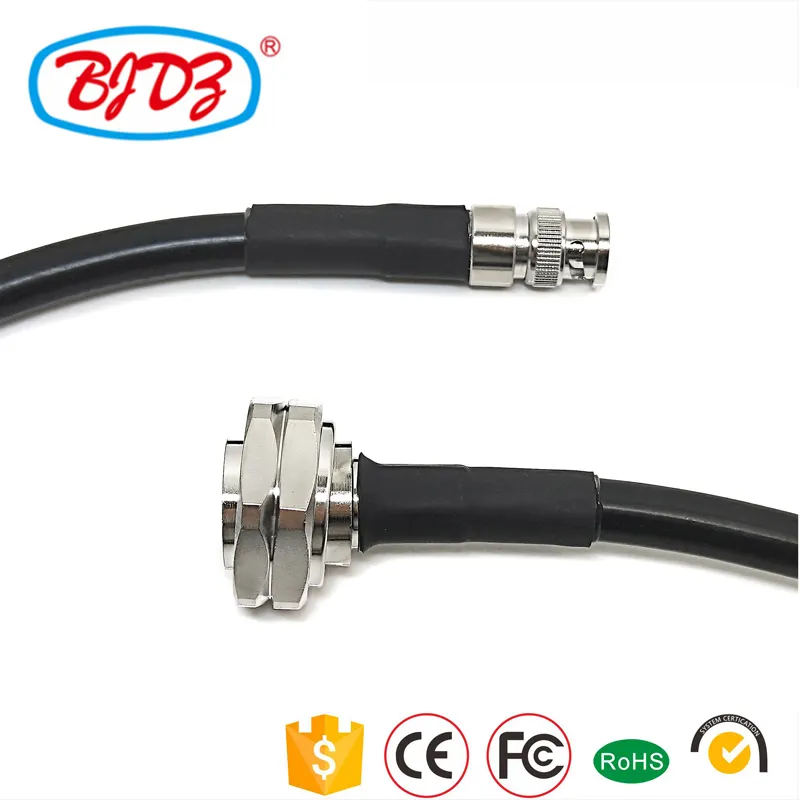
This 7/16 DIN (L29) Male to BNC Male RF jumper is engineered to connect robust, high-power cellular and broadcast infrastructure (via the heavy-duty 7/16 DIN interface) to standard 50Ω test instruments, receivers, or monitoring equipment (via the quick-disconnect BNC interface). Built with premium low-loss coaxial cables like LMR400, RG213, or RG8 (~10.3mm to 10.8mm OD), it ensures minimal signal attenuation over medium distances.
CRITICAL POWER WARNING: While the 7/16 DIN connector handles high power (up to 3,000W+), the standard BNC connector is limited to ~500W at 1 GHz. This assembly is strictly designed for receive (Rx) paths, signal sampling, directional coupler monitoring, and low-power test setups. Never transmit full high-power Tx signals through the BNC end, as it will cause catastrophic arcing and equipment damage.
Parameter | Specification |
Impedance | 50 Ohm (System-wide) |
Frequency Range | DC to 4 GHz (Limited by BNC interface); 7/16 DIN supports up to 7.5 GHz / 12 GHz |
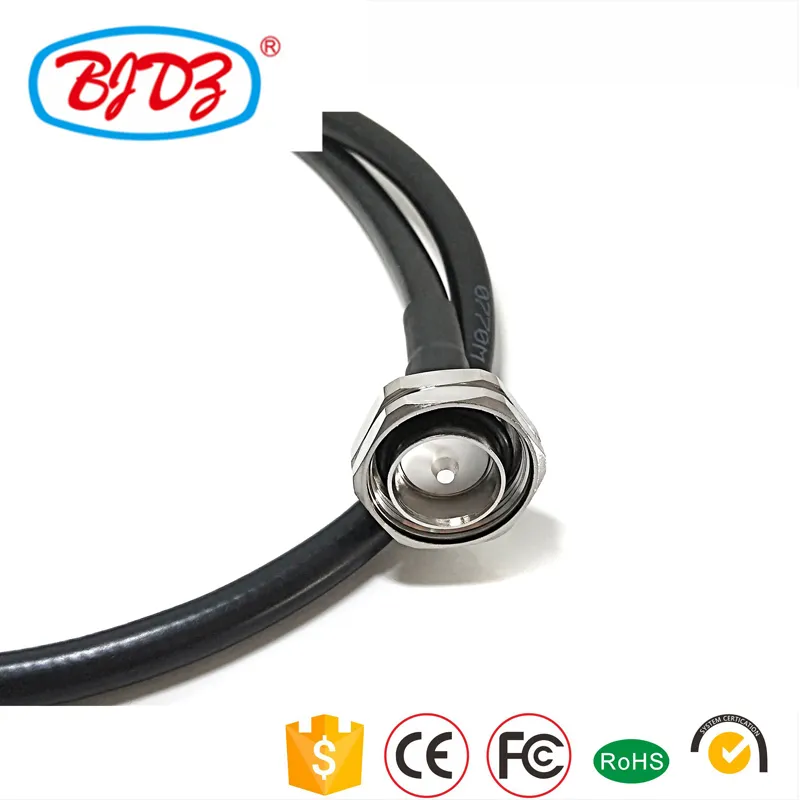
Connector A | 7/16 DIN Male Plug (L29) M29x1.5 threaded coupling Silver-plated brass body, gold-plated inner conductor Silicone O-ring for IP67 weatherproofing |
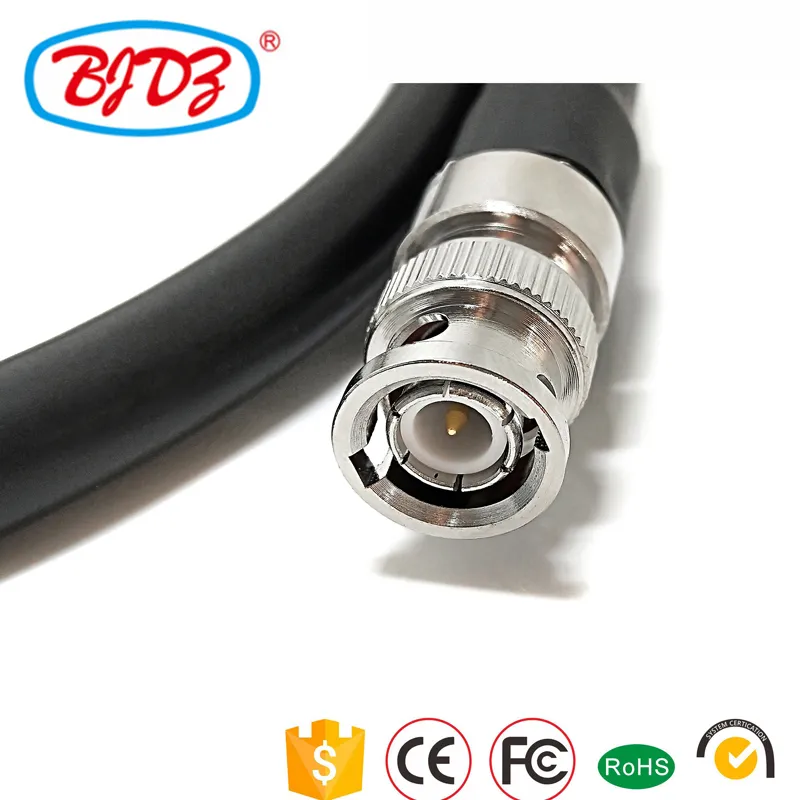
Connector B | BNC Male Plug Bayonet quick-lock coupling Nickel or gold-plated brass, PTFE dielectric Optimized for 50Ω test gear |
Cable Options | LMR400: Ultra-low loss, foam PE, 10.3mm OD (Best for long runs) RG213/U: Double-shielded, solid PE, 10.8mm OD (Mil-spec, high EMI rejection) RG8/RG8U: Standard low-loss, 10.3mm OD (Cost-effective) |
Insertion Loss (Cable) | LMR400: ≤ 0.07 dB/m @ 1 GHz; ≤ 0.13 dB/m @ 2.5 GHz RG213: ≤ 0.09 dB/m @ 1 GHz; ≤ 0.16 dB/m @ 2.5 GHz |
VSWR | ≤ 1.20:1 (DC–1 GHz); ≤ 1.30:1 (1–3 GHz) |
Power Handling | 7/16 DIN end: ~3,000W @ 1 GHz; BNC end: ~500W @ 1 GHz (System limited by BNC) |
Shielding Effectiveness | > 90 dB (LMR400/RG213 up to 3 GHz) |
Temperature Range | -40°C to +85°C (Standard); -55°C to +165°C (with PTFE/LSZH options) |
Bend Radius | Single bend: 40 mm; Repeated bending: 100 mm |
Key Certifications | ROHS, REACH, CE, ISO 9001 |
1. Optimized for Signal Sampling & Rx Monitoring
Base stations and broadcast transmitters use 7/16 DIN for main Tx/Rx lines. This jumper allows technicians to safely tap into receive antennas, directional couplers, or low-power monitoring ports to analyze signal quality using standard BNC-equipped spectrum analyzers.
2. Ultra-Low Loss Thick Coax (LMR400 / RG213)
Unlike thin pigtails (e.g., RG316), LMR400 and RG213 feature a thick foam/solid PE dielectric and heavy braided shielding. This prevents signal degradation when routing cables from the top of a cell tower down to the base station shelter for testing.
RG214/RG213 double-braid shielding provides >90 dB EMI rejection, critical in noisy RF environments like radar sites or multi-carrier cell towers.
3. Rugged 7/16 DIN Weatherproofing
The 7/16 DIN connector includes a built-in silicone rubber O-ring, ensuring an IP67 waterproof seal when mated to outdoor antennas or tower-mounted amplifiers (TMAs), protecting the test setup from rain and humidity.
4. Quick-Disconnect BNC for Field Technicians
The BNC bayonet coupling allows field engineers to rapidly connect and disconnect handheld analyzers (e.g., Anritsu Site Master, Rohde & Schwarz FSH) without needing torque wrenches, speeding up site maintenance.
Cellular Base Station Maintenance: Tapping into BTS Rx ports or TMAs for PIM (Passive Intermodulation) and VSWR sweep testing.
Broadcast & TV Transmitters: Connecting high-power amplifier monitoring loops to dummy loads or RF power meters.
Radar & Military Comms: Routing RF signals from heavy-duty outdoor radomes to indoor COTS (Commercial Off-The-Shelf) 50Ω test receivers.
Ham Radio & Amateur Satellite: Linking high-power outdoor HF/VHF/UHF amplifiers (using 7/16 DIN) to indoor transceivers or SWR meters (using BNC/SO-239 adapters).
Laboratory RF Testing: Adapting high-power RF test chambers (7/16 DIN panels) to standard benchtop network analyzers (BNC/N-type).
1. 100% VSWR & Insertion Loss Testing
Every assembly is swept from DC to 4 GHz using a calibrated Vector Network Analyzer (VNA). Units failing the ≤ 1.30:1 VSWR threshold are rejected.
2. 7/16 DIN Torque & Waterproof Validation
Threaded couplings are pre-torqued and marked. O-rings are vacuum-tested to guarantee IP67 ingress protection.
3. Cable-to-Connector Pull Strength
Heavy cables like LMR400 exert significant strain on connectors. We use heat-shrink strain relief boots and internal crimp/solder reinforcement to withstand >150 N of pull force.
4. PIM (Passive Intermodulation) Screening (Optional)
For cellular applications, assemblies can be tested for PIM levels of -155 dBc (or better) to ensure they don't introduce noise into sensitive Rx paths.
Standard Packaging: Coiled and secured with Velcro straps, sealed in a moisture-barrier bag with desiccant.
Labeling: Clear tags indicating Cable Type (e.g., "LMR400"), Length, and VSWR test pass date.
Lead Time: In stock (1m, 2m, 3m lengths) ship within 24 hours. Custom lengths (up to 50m) take 3–5 days.
MOQ: 1 piece for stock; 10 pieces for custom lengths.
Q1: Can I use this cable to transmit 1,000 Watts from my broadcast amplifier?
A: No. While the 7/16 DIN end and the LMR400 cable can handle 1,000W+, the BNC connector will overheat and arc at power levels above ~500W (at 1 GHz). For high-power Tx transmission, you must use a 7/16 DIN to N-Type or 7/16 DIN to 7/16 DIN assembly.
Q2: Is the 7/16 DIN connector the same as an N-Type?
A: No. 7/16 DIN (also called L29) is significantly larger (29mm thread diameter vs. N-Type's 16mm) and is designed for much higher power and better PIM performance. They are not mateable.
Q3: Can this be used outdoors?
A: Yes, at the 7/16 DIN end. The 7/16 DIN connector is weatherproof (IP67) when properly mated. However, the BNC end is NOT waterproof and must remain indoors or inside a weatherproof enclosure. For outdoor cables, we recommend wrapping the 7/16 DIN joint with butyl rubber waterproofing tape.
Verify the BNC Port: Ensure your test equipment actually uses a 50Ω BNC port. Some older video/broadcast gear uses 75Ω BNC, which will cause a severe impedance mismatch and high VSWR if used with this 50Ω cable.
Weight & Strain: LMR400 and RG213 are heavy cables. If the BNC end is plugged into a fragile PCB-mounted port, use a cable tie or strain relief to support the cable's weight.
Torque the 7/16 DIN: Always use a torque wrench (typically 25 N·m) when mating the 7/16 DIN connector to ensure proper electrical contact and weather sealing. Hand-tightening can lead to PIM issues and water ingress.
Download LMR400 vs RG213 Loss Chart | Request Custom Length Quote
Includes free VSWR test report with every shipment.
Need high-power transmission instead of testing? → Explore 7/16 DIN to N-Type High Power Jumpers | Browse 7/16 DIN to 7/16 DIN Feeder Cables.
 English