en
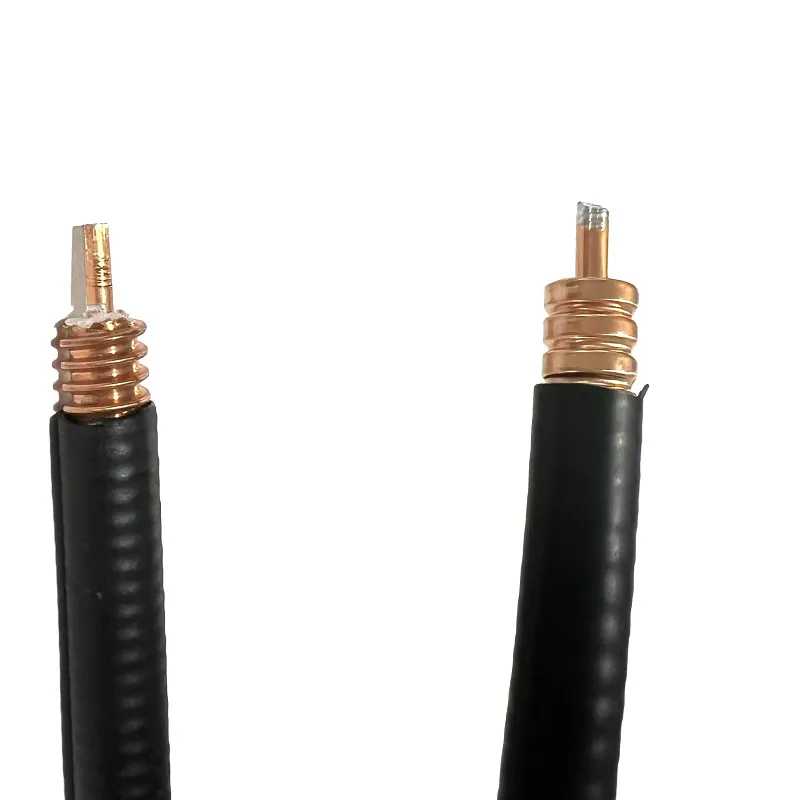
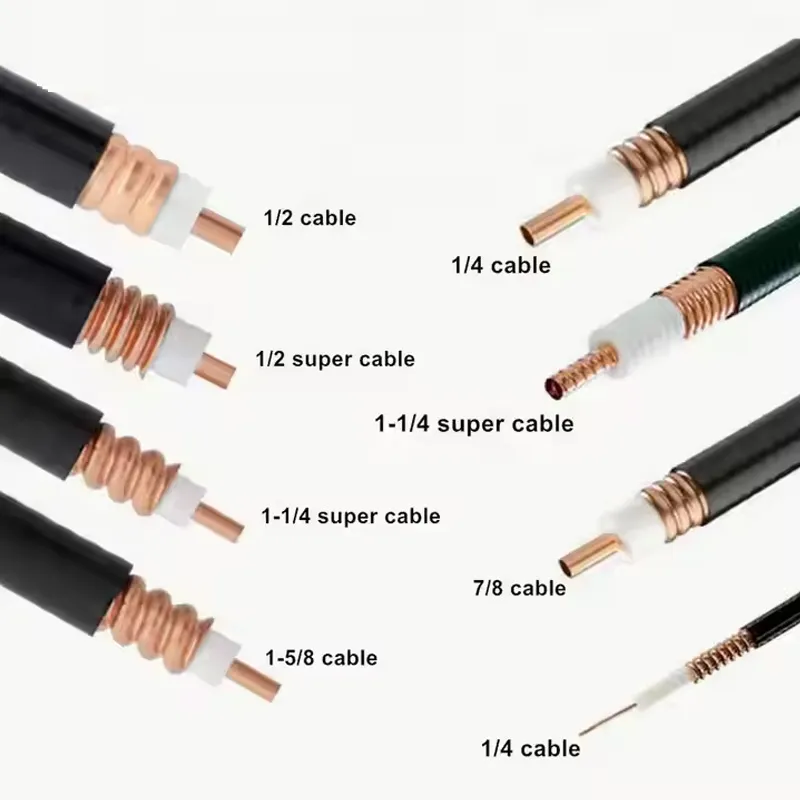



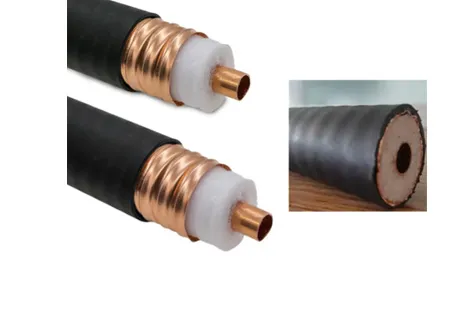
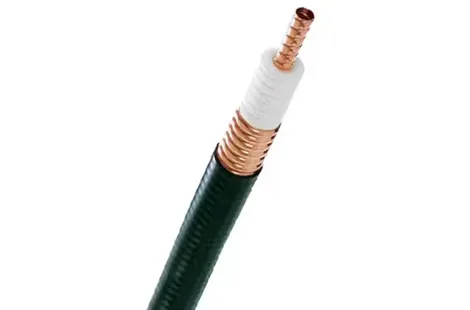
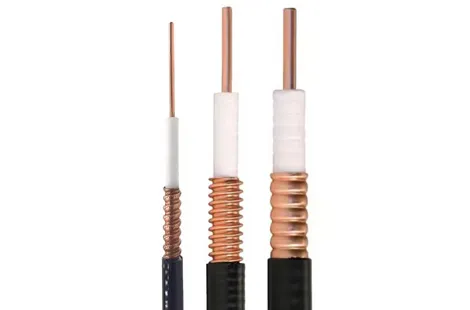
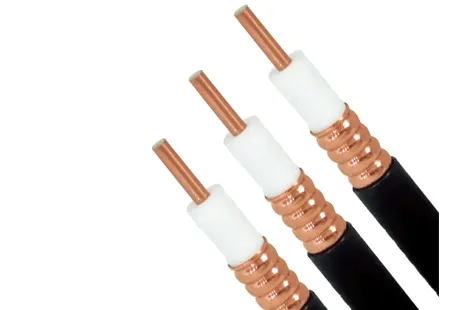
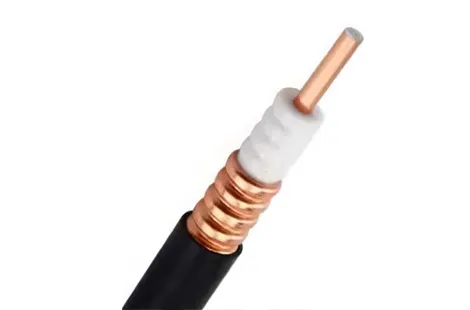
Coaxial feeder cables have low losses and strong anti-interference properties. The characteristic impedance of commonly used coaxial cables is 75 Ω and 50 Ω. In urban cable television, coaxial cables are directly connected to the signal source and television, making them ideal television signal transmission lines. The commonly used coaxial cable consists of an inner conductor, insulation layer, shielding layer, and outer protective layer.
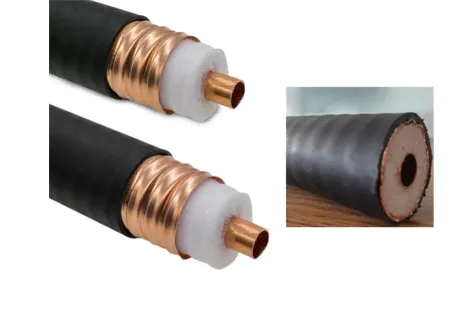
| Structure parameters | ||
| Item | Material | Diamenter (mm) |
| Diameter Over Dielectric | Foam PE | 8.92 |
| Diameter Over Jacket | PE | 13.46 |
| Inner Conductor OD | Copper-clad aluminum wire | 3.55 |
| Outer Conductor OD | Corrugated copper | 12.19 |
| Nominal Size | 1/2 in | |
| Performance parameters | |||
| Capacitor | 82.7pF/m | ||
| Impedance | 50ohm | ||
| Transmission rate | 81% | ||
| DC Resistance, Inner Conductor | 2.69 ohms/km | ||
| DC Resistance, Outer Conductor | 5.12 ohms/km | ||
| DC Test Voltage | 2500 V | ||
| Operating Frequency Band | 1-10200 MHz | ||
| Inductance | 0.207 µH/m | ||
| Insulation Resistance | 100000 MOhms-km | ||
| Jacket Spark Test Voltage (rms) | 5000 V | ||
| Peak Power | 22.5 kW | ||
| Working temperature range | -70~+85℃ | ||
| Bending radius | 31.75mm | ||
| ROHS/CE/FCC | YES | ||
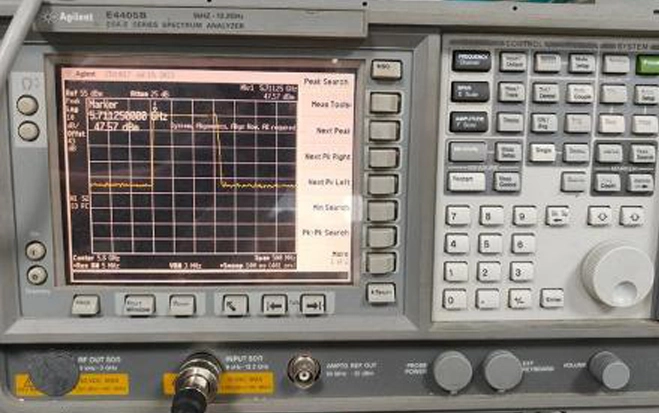
| VSWR/Return Loss | Frequency Band | VSWR | Return Loss (dB) |
| 680–800 MHz | 1.21 | 20.8 | |
| 800–960 MHz | 1.21 | 20.8 | |
| 1700–2200 MHz | 1.21 | 20.8 | |
| 2300–2700 MHz | 1.21 | 20.8 | |
BJDZ RF coaxial cable is highly favored for its excellent performance and wide range of application scenarios.
Mobile communication base stations: used to connect base station antennas and communication equipment, ensuring stable signal transmission.
Mobile phone signal coverage: used to enhance the coverage and strength of mobile phone signals in scenarios such as inside buildings or signal blind spots.
Interphone signal coverage: used to connect interphone antennas and communication equipment in interphone communication systems, ensuring smooth communication.
Radio and television systems: used to transmit radio and television signals, ensuring program clarity and stability.
Other communication scenarios: such as radar systems, satellite communication systems, radio communication systems, etc., all require the use of RF coaxial cables to transmit RF signals.
 English