en
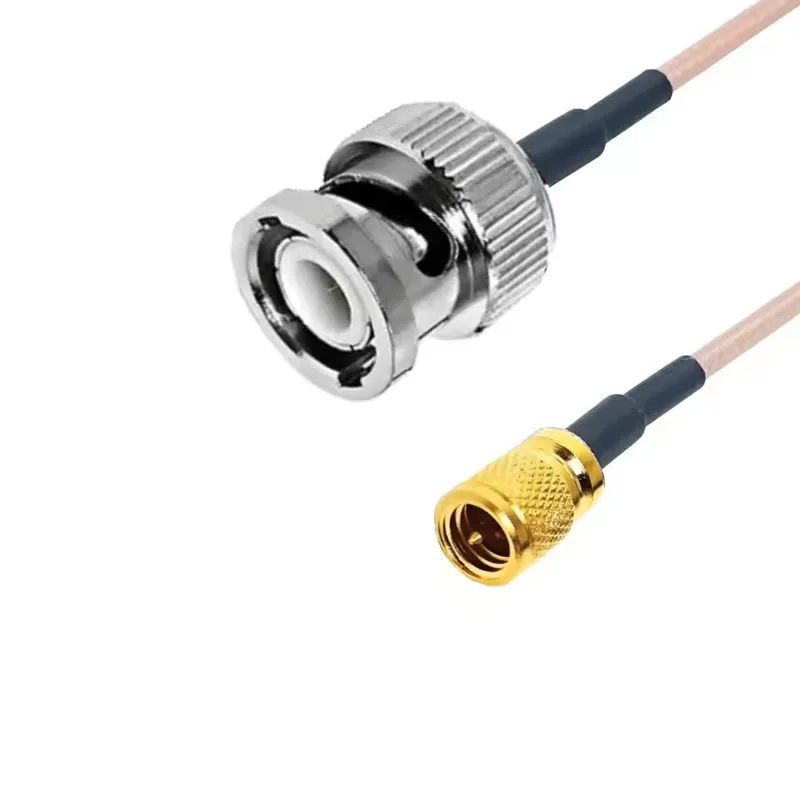
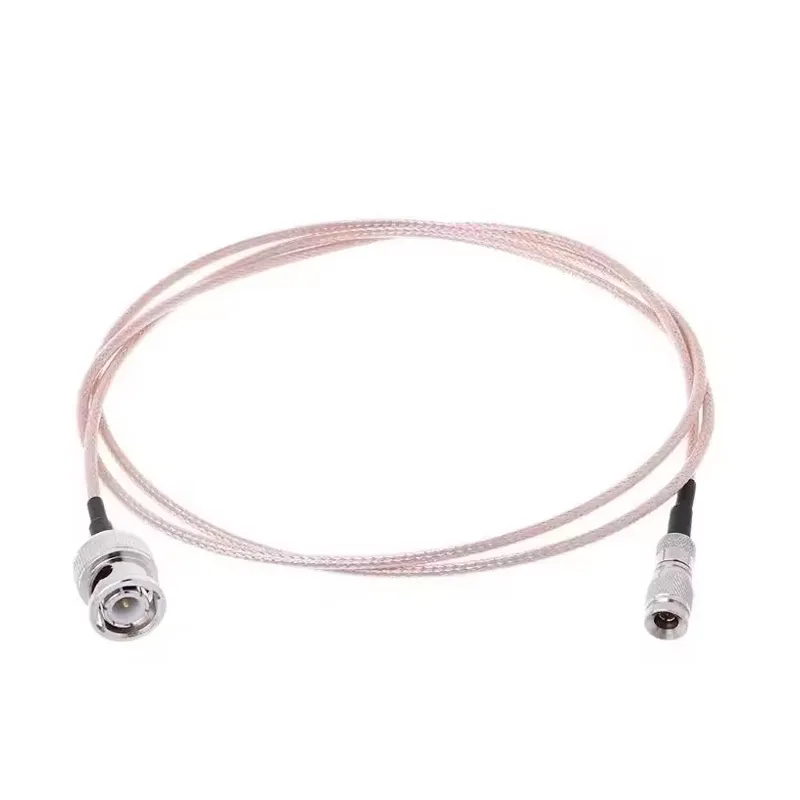
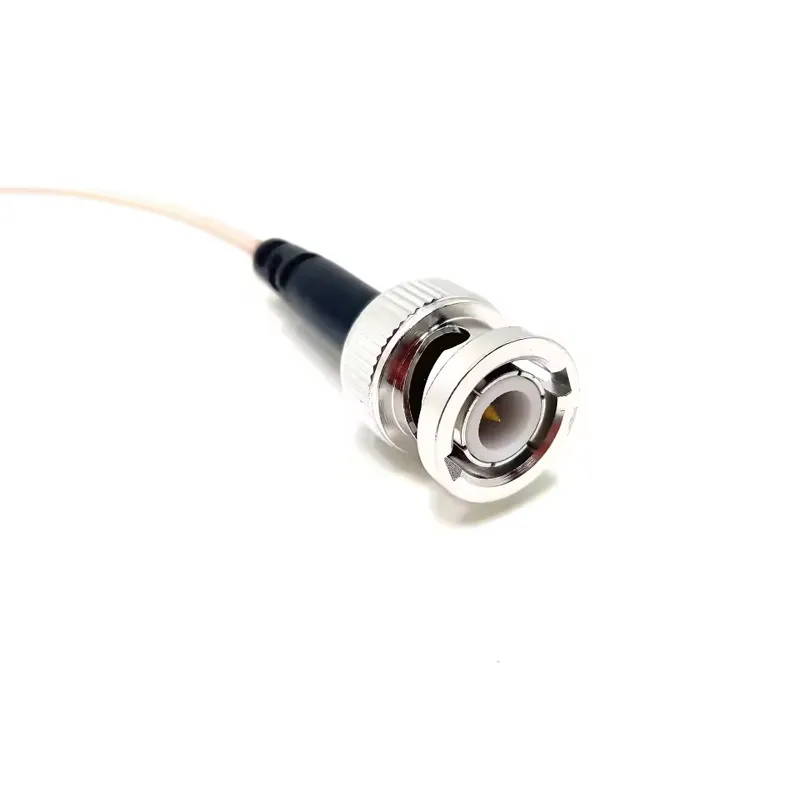
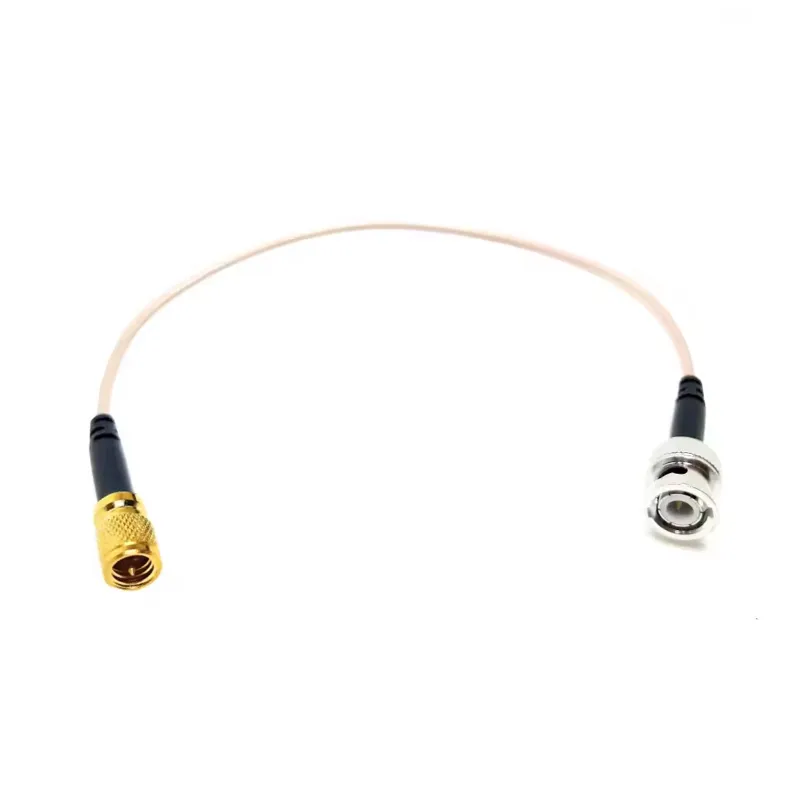
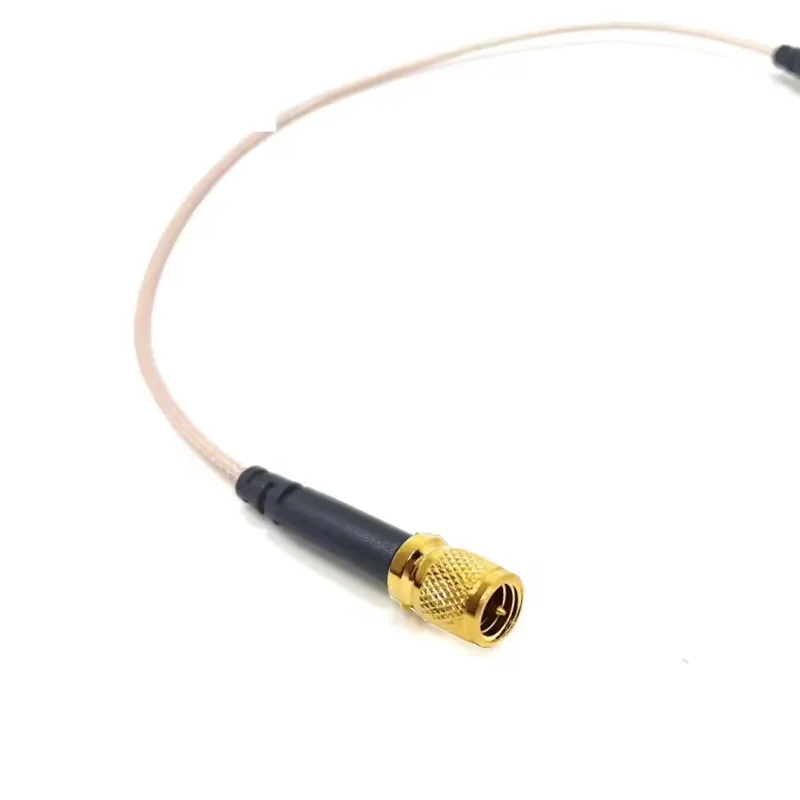
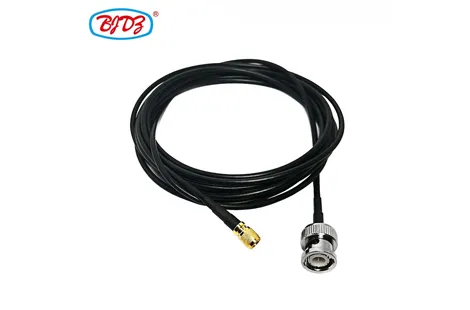
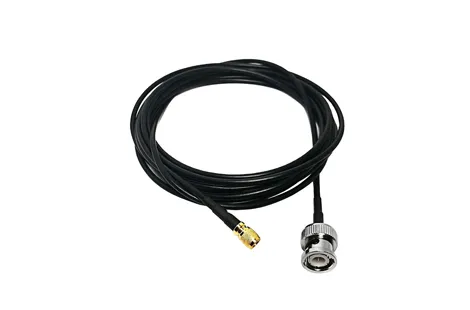
Engineered specifically for Time of Flight Diffraction (TOFD) and advanced ultrasonic non-destructive testing (NDT), this specialized coaxial cable assembly ensures flawless signal transmission between flaw detectors and ultrasonic probes. TOFD technology relies on capturing precise diffraction signals from defect tips, demanding ultra-low signal loss and high shielding effectiveness.
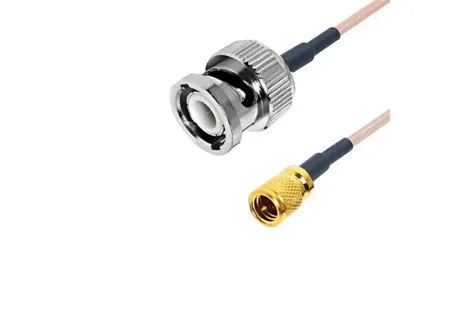
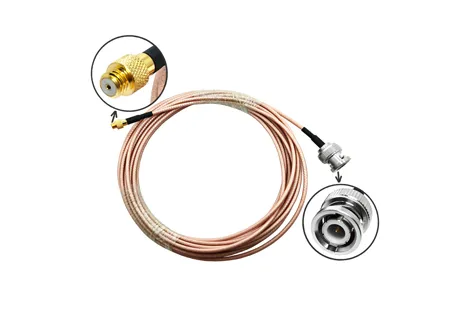
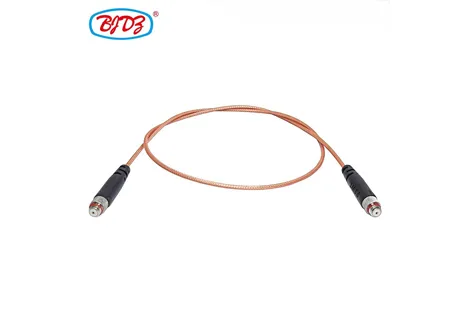
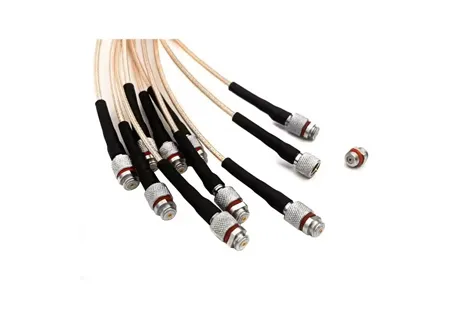
This assembly features a standard BNC Male connector for direct integration with multi-channel TOFD flaw detectors, transitioning to 10-32 UNF or M5 Microdot connectors for secure mating with piezoelectric ultrasonic probes. Built with premium copper RG178 coaxial cable, this pigtail provides exceptional flexibility for navigating complex weld geometries and harsh industrial testing environments, ensuring accurate defect sizing and depth measurement.
Parameter | Specification |
Impedance | 50 Ohm |
Connector A | BNC Male Plug Bayonet coupling Brass body, gold/nickel-plated PTFE dielectric |
Connector B | 10-32 UNF or M5 Microdot Female/Male Precision threaded coupling Gold-plated beryllium copper contact |
Cable Type | RG178/U (Ultra-thin, high-flex, copper construction) |
Cable Construction | Center: Stranded Silver-plated Copper / Copper-clad Steel (7/0.10mm) Dielectric: Extruded PTFE Shield: Silver-plated Copper Braid (>95% coverage) Jacket: FEP (Teflon) |
Outer Diameter (OD) | ~1.80 mm (0.071 inches) |
Temperature Rating | -55°C to +200°C (FEP/PTFE construction) |
Capacitance | 95 pF/m |
Frequency Range | DC to 3 GHz (Optimized for broadband TOFD ultrasonic pulses) |
VSWR | ≤ 1.30:1 (DC to 3 GHz) |
Optimized for TOFD Signal Integrity: TOFD testing requires capturing weak diffraction signals from crack tips. The high-density (>95%) silver-plated copper braid shielding ensures maximum EMI/RFI rejection in noisy industrial environments, while the low-capacitance PTFE dielectric preserves the sharp rise-time of broadband ultrasonic pulses.
Precision Microdot Threading (10-32 / M5): Ultrasonic probes utilize delicate mounting studs. Our 10-32 UNF and M5 Microdot connectors are precision-machined to exact tolerances, ensuring smooth threading without cross-threading, and providing a reliable electrical ground and mechanical connection to the probe.
Ultra-Flexible Copper RG178 Core: NDT inspections often require routing cables through tight spaces, scaffolding, and complex pipe geometries. The 1.8mm ultra-thin RG178 copper cable offers extreme flexibility and a micro-bend radius, preventing cable fatigue and eliminating mass-loading effects on the ultrasonic probe.
High-Temperature PTFE/FEP Survival: Ultrasonic testing is frequently performed on hot pipes, pressure vessels, and industrial machinery. The solid PTFE dielectric and FEP outer jacket allow the assembly to withstand continuous operating temperatures up to 200°C without melting or degrading.
Industry / Field | Specific Use Case |
Oil & Gas / Petrochemical | TOFD scanning of pressure vessel welds, storage tanks, and pipeline girth welds. |
Power Generation | Ultrasonic testing of boiler tubes, steam pipes, and nuclear reactor components. |
Aerospace & Aviation | NDT inspection of airframe structures, turbine blades, and composite materials. |
Heavy Manufacturing | Quality assurance of structural steel welds, shipbuilding, and heavy machinery. |
Third-Party NDT Inspection | Field testing and flaw detection services utilizing portable TOFD/UT equipment. |
Thread Gauge Verification: Every 10-32 and M5 Microdot connector is verified with calibrated Go/No-Go gauges to guarantee perfect mating with standard ultrasonic probe studs.
High-Potential (Hi-Pot) Testing: Each assembly is Hi-Pot tested to ensure the PTFE dielectric has no micro-punctures, preventing signal leakage and ensuring reliable operation with TOFD instrument bias voltages.
VNA Electrical Testing: Assemblies are swept to verify insertion loss and VSWR, ensuring that the broadband ultrasonic pulses required for TOFD diffraction analysis are transmitted without distortion.
Strain Relief & Flex Testing: Molded strain relief boots are applied at both connector junctions. The assembly undergoes cyclic flex testing to ensure the copper braid and center conductor do not fatigue during repeated field routing.
Standard Packaging: Coiled loosely to prevent memory/kinking and sealed in anti-static, moisture-barrier bags.
Labeling: Clearly tagged with "BNC(M) to 10-32/M5 Microdot | RG178 Copper | [Length]".
Lead Time: Standard lengths ship within 24 hours. Custom lengths typically require 3–5 business days.
MOQ: 1 piece for standard stock; 10 pieces for custom length runs.
Q1: What is the difference between 10-32 and M5 Microdot connectors?
A: They are similar but NOT interchangeable.
• 10-32 UNF is the Imperial standard (0.190" diameter, 32 threads per inch) widely used in North America.
• M5 is the Metric standard (5mm diameter).
• Always verify your ultrasonic probe's specification sheet before ordering to prevent cross-threading and damaging the probe stud.
Q2: Why is RG178 preferred over thicker cables for TOFD testing?
A: TOFD probes are lightweight and sensitive. Thicker, stiffer cables can exert mechanical force on the probe, altering its coupling and resonance (mass loading). The ultra-thin (1.8mm) and highly flexible RG178 eliminates this interference, ensuring accurate diffraction signal capture.
Q3: Can this cable be used for standard UT (Pulse-Echo) testing as well?
A: Yes. While optimized for the broadband signals used in TOFD, this 50-ohm low-loss assembly is fully compatible with standard pulse-echo ultrasonic flaw detectors and piezoelectric probes.
Q4: How should I clean the Microdot connector before attaching it to the probe?
A: Wipe both the probe mounting base and the Microdot connector face with isopropyl alcohol. Dirt, oil, or moisture can break the electrical ground path, introducing noise into the TOFD diffraction signals.
Use a Torque Wrench: When attaching the Microdot connector to the ultrasonic probe, use a miniature torque wrench (typically 15 to 20 in-lbs or 1.7 to 2.3 N·m). Hand-tightening can cause poor grounding; over-tightening will snap the delicate probe stud.
Maintain Bend Radius: Although RG178 is highly flexible, maintain a minimum static bend radius of 10mm to prevent kinking the stranded copper center conductor or crushing the PTFE dielectric.
Avoid Sharp Pulling: Never pull the cable directly to disconnect the Microdot connector. Always grip the connector body to unthread it from the probe.
Environmental Protection: If testing in wet or corrosive environments, apply self-amalgamating tape over the BNC and Microdot mating points to prevent moisture wicking into the connectors.
 English